Permit service
Unpermitted work is common in Sarasota and it is fixable. The mechanism is an after-the-fact permit: applying for the permit the work should have had, then proving to the county or city that the work meets code. The process is more involved and more expensive than permitting would have been up front, but it is a known road, and we drive it for you.
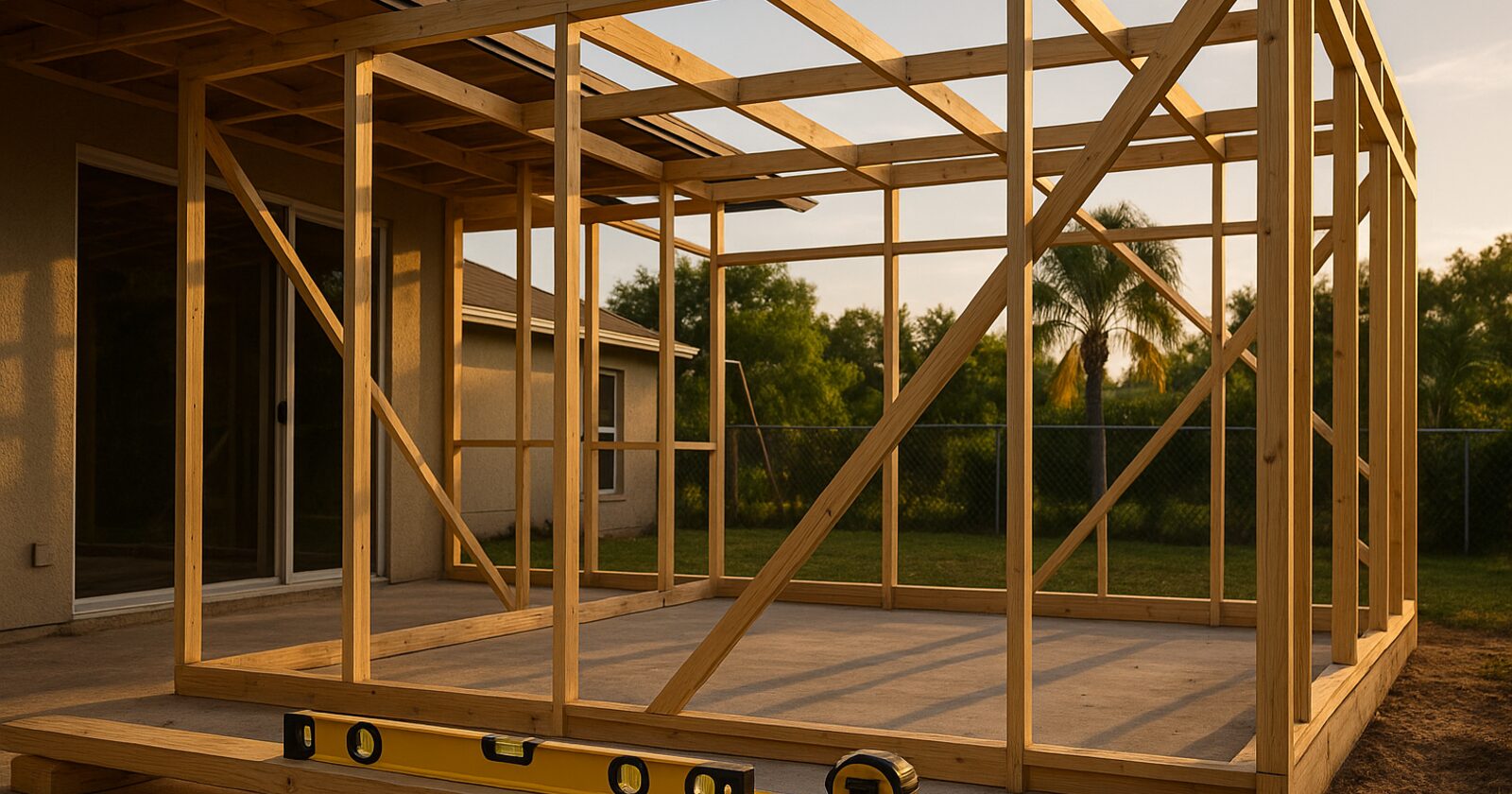
How unpermitted work happens
Almost nobody sets out to break the building code. A previous owner enclosed the lanai in 2009 with a crew a neighbor recommended. A handyman swapped the water heater and never mentioned permits. A garage became a bonus room decades ago and three sales later, nobody remembers it was ever a garage. Sarasota's older neighborhoods are full of houses like this, and the current owner usually discovers the situation at one of three moments: preparing to sell, filing an insurance claim, or getting a letter after a complaint or an inspector's visit.
Whatever the origin, the legal situation is the same. Work that required a permit exists without one, the property record does not match the property, and the exposure lands on whoever owns the house today. The fix has a name: the after-the-fact permit.
What an after-the-fact permit is
An after-the-fact permit is the same permit the work should have had, applied for after the work exists. The county or the City of Sarasota reviews the application, then inspects the completed work to confirm it meets code. Because inspectors normally see work in stages, and finished work hides its stages behind drywall and finishes, the office may require more than a normal permit would: documentation from a licensed engineer attesting to what was built, partial exposure of concealed work so an inspector can see connections, or corrections where the work falls short of code.
Expect it to cost more than the original permit would have. After-the-fact applications typically carry higher fees, and the supporting documentation is a real expense on structural work. This is the honest price of legalization, and it is still routinely cheaper than the alternatives: a collapsed sale, a denied claim, or an enforcement case with a deadline.
The process we run
First, research. Before anything gets filed, we establish the facts: what exactly is unpermitted, which jurisdiction the property answers to, what the permit record does show, and whether the situation is one item or several. Owners are regularly surprised in both directions; sometimes the scary addition turns out to be permitted and closed, and sometimes the innocent-looking bathroom hides three generations of unpermitted plumbing. A permit history report is often the first concrete step.
Second, the candid read. Legalization is not always one path. Depending on what was built, when, and how well, the road may be a straightforward after-the-fact permit and inspection, or it may require an engineer's evaluation, exposure of framing or connections, or corrections first. Occasionally the honest answer is that removing the work costs less than legalizing it, and when that is true we say so before you spend money. You get the whole picture, in writing, with a flat fee for our part, before you commit. Our pricing page explains how the fee works.
Third, the application. We prepare and submit the after-the-fact package to the right office, with the documentation assembled. Where a licensed professional's work is required, an engineer's letter, a contractor taking responsibility for corrections, we coordinate yours or help you find one. We are not the engineer and not the contractor; we are the party making sure their pieces and the paperwork arrive at the right counter in the right order.
Fourth, inspections through closure. The office inspects, sometimes in several visits. When an inspector wants something opened up or corrected, we translate the request, coordinate the work with your contractor, and reschedule. It ends the way everything we do ends: with the permit in closed status in the official record, and written confirmation to you. From that day forward, the lanai, the bonus room, the water heater are simply part of the house.
Selling a house with unpermitted work
This deserves plain words, because sellers get bad advice here. Florida sellers must disclose known material defects, and unpermitted work you know about belongs in that conversation with your agent. Hoping the buyer's side will not notice is not a strategy: lien searches, appraisers, and inspectors notice, and a mid-escrow discovery costs more in renegotiation than legalization would have. The workable options are to legalize before listing, which we handle start to finish, or to disclose and price the work as-is, which some sellers legitimately choose. What we will not do is help anyone conceal it; that protects nobody, including you. If a sale is on the horizon, start with the assessment early enough to have options.
If you got a letter
Code enforcement letters about unpermitted work come with response windows, and ignoring them makes everything worse: fines accrue and goodwill evaporates. The good news is that offices generally want compliance, not punishment, and an owner who shows up promptly with a credible legalization plan is treated like someone fixing a problem. We help you respond within the window, get the after-the-fact application moving, and keep the office informed of real progress. What we do not do is give legal advice; if your situation has already grown into fines, liens, or hearings, you want an attorney alongside the permitting work, and we coordinate cleanly with them.
When you do not need us
If the unpermitted item is small, recent, and simple, say, a water heater a plumber can re-inspect under a straightforward after-the-fact trade permit, your plumber may resolve it in one visit, and we will tell you that for free. We earn the fee on the tangled cases: multiple items, structural questions, vanished contractors, jurisdictional wrinkles, sale deadlines, or enforcement clocks. Send the address and the story through the free assessment, or contact us with a question first. The read on your situation costs nothing and commits you to nothing.
What's included
Research: what is unpermitted, in which jurisdiction, and how it got that way A candid read on the legalization path before you commit to anything After-the-fact permit applications prepared and submitted Coordination with your licensed contractor or engineer where required Inspections managed, corrections coordinated, permit driven to closed Honest advice when removal beats legalization
Where we run this service
Related work
Also on our desk
Residential Permit Expediting
Your home project needs a permit. We prepare the application, submit it to the right office, track the review daily, and carry it through inspections to a closed permit.
Learn more →
Contractor Permit Running
Your crew should be building, not babysitting portals. We run your permit volume: complete submittals, daily queue checks, corrections handled, inspections scheduled, files closed.
Learn more →
Open & Expired Permit Resolution
Open or expired permits kill closings. We research every unresolved permit on your property, figure out exactly what each one needs, and drive them all to closed status.
Learn more →
Permit Research & History Reports
Know what the permit record says before someone else finds out for you. A plain-English report of every permit on a property: what exists, what is open, and what is missing.
Learn more →
Owner-Builder Permit Assistance
Florida lets you pull your own permit as an owner-builder, with real obligations attached. We handle the paperwork and process so doing it yourself does not mean doing it alone.
Learn more →
Inspection Scheduling & Permit Closeout
The last mile of every permit: inspections called at the right moments, failures triaged fast, and the file driven to closed status so it never resurfaces at a closing.
Learn more →Answers
Questions about Unpermitted Work & After-the-Fact Permits
Will I get in trouble for applying for an after-the-fact permit?
The unpermitted work was done by a previous owner. Why is it my problem?
Will the work have to be torn open for inspection?
Is it ever smarter to just remove the unpermitted work?
Can I sell my house without fixing the unpermitted work?
Start here
Tell us about your permit
A real local person reads every request and replies with a clear next step, usually the same business day. No cost, no obligation.