Permit service
Permits do not end at approval. They end when the final inspection passes and the record says closed, and that last mile is where an astonishing number of Sarasota permits quietly die. We run it: scheduling, readiness, failure triage, rescheduling, and written confirmation that the file is actually closed.
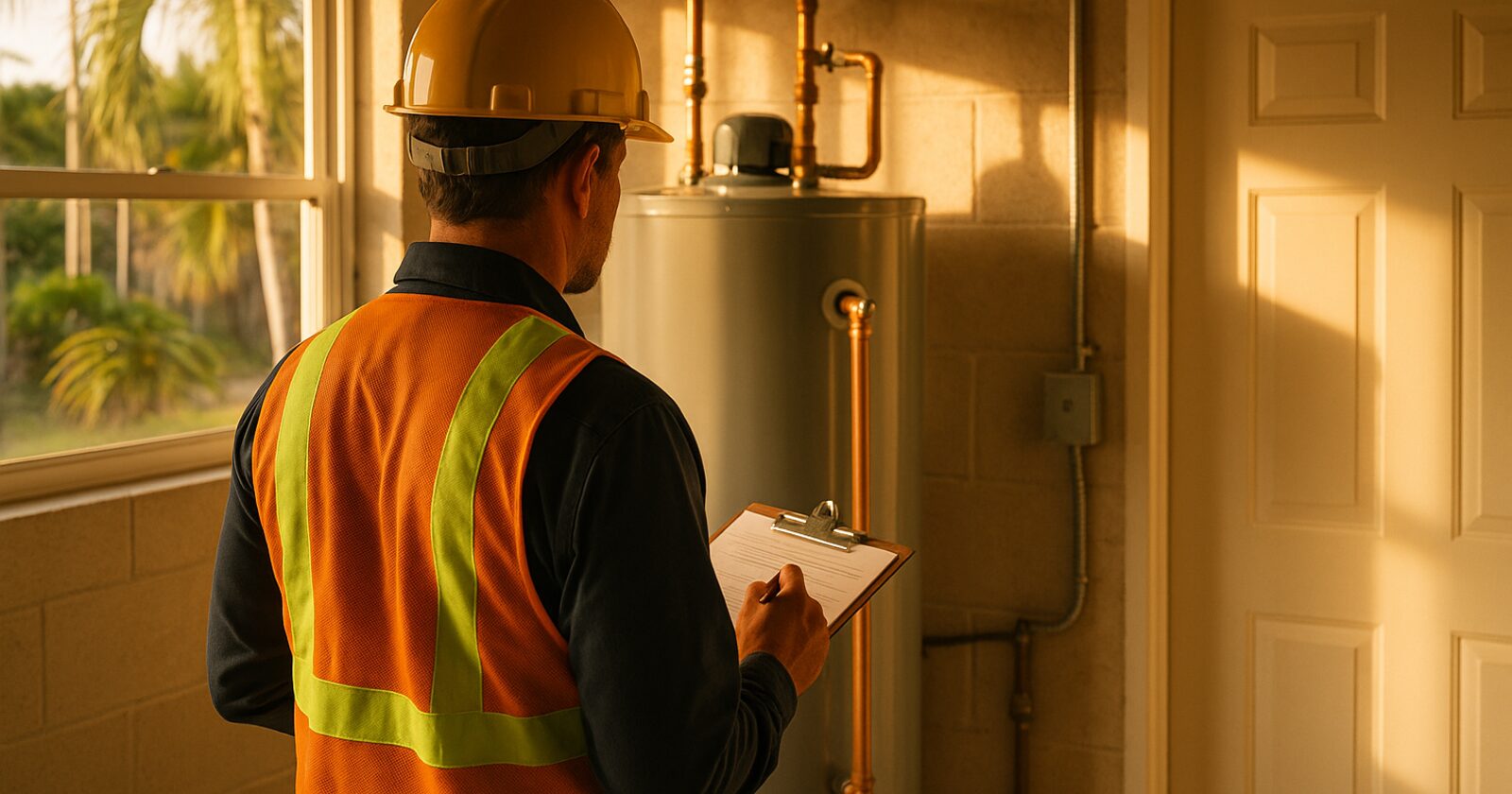
Approved is not finished
Every permit lives in two acts. The first is review: the application, the checklist, the queue, the approval. Most people treat approval as the finish line, and that is precisely the mistake this service exists for. The second act is inspections: the county or the City of Sarasota physically verifying, at defined stages, that the work matches what was approved. Only when the last of those inspections passes does the permit reach closed status, and only closed permits are actually done.
The gap between act one and act two is where files go to die. The work gets finished, everyone gets paid, life moves on, and the final inspection nobody scheduled never happens. The permit sits open, then quietly expires under the Florida Building Code's 180-day inactivity rule, and the property carries an open or expired permit until the day a title company finds it. A large share of the closing emergencies we untangle started exactly here, years earlier, as a missing phone call.
What the service covers
This is the last-mile service for permits that already exist, whoever obtained them. Homeowners hand us a permit their contractor pulled and stopped shepherding. Contractors hand us the inspection phase of jobs so their crews stay on tools. Owner-builders hand us the sequencing they took on and would rather not learn by failing. Sellers hand us the almost-done permit standing between them and a clean lien search.
Concretely, we schedule each required inspection through the county's or city's system at the moment the work is genuinely ready for it. Before the inspector rolls, we run the readiness check: is the stage complete, is the approved plan set on site, is the Notice of Commencement recorded and posted where the project requires one, is access arranged. Failed inspections cost days and goodwill, and a large fraction of failures are administrative rather than workmanship, exactly the kind a checklist prevents.
When an inspection does fail on the work itself, we get the inspector's notes the same day and translate them into a specific action item your contractor can execute: not deficiency per code section, but the junction box on the lanai wall needs a cover plate, then we reschedule. Failure triage speed is the difference between a two-day stumble and a three-week stall, especially when the 180-day clock is already deep into its count.
And we track that clock on every file. An approved inspection resets it; silence runs it out. Files on our desk do not expire by accident, because someone is paid to watch the calendar.
Inspection order is learned knowledge
Inspections are sequential by construction logic: what gets covered up must be verified before it is covered. Underground plumbing before the slab. Framing and rough trades before insulation. Insulation before drywall. Call them out of order, or cover work before its inspection, and the remedy is opening finished work back up so the inspector can see what is inside, at your expense, twice.
Contractors carry this sequence in their heads for their own trade; the coordination across trades is the general contractor's job, and on projects without an engaged GC, the job defaults to whoever owns the permit. That is where sequencing mistakes happen, and they are entirely preventable by someone who runs inspections every week. We are that someone, for homeowner projects, contractor volume, and owner-builders alike.
Closeout, meaning actually closed
The deliverable of this service is not a passed final; it is the record. After the final inspection passes, we verify the permit's status in the county's Accela system or the City of Sarasota's records, chase down any administrative dangler holding a file open, a fee balance, an unposted document, a certificate step on projects that require one, and send you written confirmation that the permit shows closed. That confirmation is the artifact that matters: it is what a future lien search will agree with, and it is the difference between a permit you finished and a permit you merely stopped working on.
For sellers mid-transaction, this whole service compresses: a nearly-done permit, a hard closing date, and a title company waiting. We run those files with the closing date on the wall, and the earlier they reach us, the more room everyone has. If your lien search just came back with a surprise, start with the free assessment today rather than Friday.
Two offices, two rhythms
As with everything in this market, inspections run differently on each side of the jurisdictional line. Scheduling systems, request cutoffs, and daily rhythms differ between Sarasota County and the City of Sarasota, and knowing both is the difference between the visit you wanted this week and the one you get next week. It is the same two-jurisdiction fluency behind the rest of our services, applied to the phase where days are the currency.
When you do not need us
If your contractor is engaged and already scheduling their own inspections on a simple job, let them; that is the system working. This service earns its flat fee when the permit holder is stretched: multi-trade projects without a GC, contractors at volume, owner-builders mid-learning-curve, absentee owners, permits approaching their 180-day cliff, and any file that has already failed an inspection and stalled. Send the permit number or the property address through the free assessment and we will tell you exactly what the file needs, what it costs flat per our pricing, and whether it is genuinely a ten-minute call you can make yourself. Or contact us with the story first; a real local person reads it either way.
What's included
Inspections scheduled at the right stage, in the right order Readiness checks so visits are not wasted on avoidable failures Failed inspections triaged: what the inspector wants, in plain English Corrections coordinated with your contractor, then rescheduled fast The 180-day expiration clock tracked on every open file Final inspection through closed status, confirmed in writing
Where we run this service
Related work
Also on our desk
Residential Permit Expediting
Your home project needs a permit. We prepare the application, submit it to the right office, track the review daily, and carry it through inspections to a closed permit.
Learn more →
Contractor Permit Running
Your crew should be building, not babysitting portals. We run your permit volume: complete submittals, daily queue checks, corrections handled, inspections scheduled, files closed.
Learn more →
Open & Expired Permit Resolution
Open or expired permits kill closings. We research every unresolved permit on your property, figure out exactly what each one needs, and drive them all to closed status.
Learn more →
Permit Research & History Reports
Know what the permit record says before someone else finds out for you. A plain-English report of every permit on a property: what exists, what is open, and what is missing.
Learn more →
Unpermitted Work & After-the-Fact Permits
Work got done without a permit, by a previous owner, a handyman, or before you knew better. We map what is unpermitted and run the legalization process to a closed permit.
Learn more →
Owner-Builder Permit Assistance
Florida lets you pull your own permit as an owner-builder, with real obligations attached. We handle the paperwork and process so doing it yourself does not mean doing it alone.
Learn more →Answers
Questions about Inspection Scheduling & Permit Closeout
My permit expired before the final inspection. Is it too late?
How fast can you get an inspection scheduled?
What actually happens when an inspection fails?
Do I need to be home for inspections?
The job finished years ago but the permit is still open. Can you close it without redoing the work?
Start here
Tell us about your permit
A real local person reads every request and replies with a clear next step, usually the same business day. No cost, no obligation.