How to permit a whole-home re-roof in Sarasota County
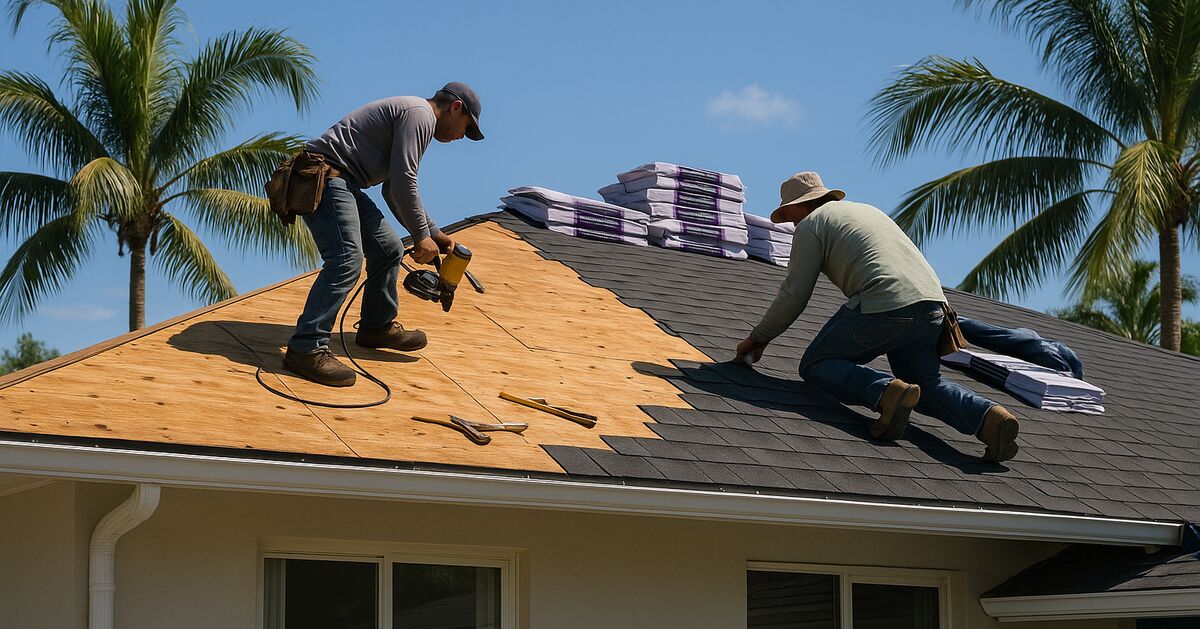
A whole-home re-roof is one of the largest single investments a Sarasota homeowner will make, and it is also one of the most permit-intensive projects the county reviews every single week. Skipping the permit or mishandling the paperwork can lead to failed inspections, warranty issues, and complications at your next closing. This guide walks you through every stage: why the rules exist, what the county actually checks, and how to move through the process without costly restarts.
Why re-roofs require a permit in Florida at all
Florida's hurricane exposure is the single biggest reason the state takes roofing permits seriously. Sarasota County falls within Florida's High-Wind Zone, and the Florida Building Code (FBC) 8th Edition requires that every component of a new roof assembly meet wind-uplift standards suited to local design wind speeds. Those speeds vary slightly across the county: properties on Siesta Key, for example, face greater coastal exposure than inland neighborhoods like Fruitville or Bee Ridge, and the permit drawings must reflect the correct design wind speed for your parcel.
Beyond hurricane resilience, the permit process protects you financially. A roof installed without county sign-off can lead to code-enforcement action that may complicate the property's title and any future sale. Our post on Sarasota County code enforcement liens: how they attach and how to get them released covers exactly how that process unfolds. Getting the permit right the first time is far cheaper than untangling a lien later.
Who can pull a re-roof permit in Sarasota County
In Florida, a roofing permit must generally be pulled by a licensed roofing contractor or a licensed general contractor. A homeowner can apply for an owner-builder exemption, but doing so carries real personal liability for workmanship and code compliance. For a project as technically specific as a re-roof, most homeowners are better served by a licensed contractor who carries the required workers' compensation and general liability coverage.
Contractors typically need their license and insurance registered with Sarasota County before a permit application can move forward. Our overview of permit expediting services explains how having an experienced hand navigate the registration and submittal steps can prevent the most common early delays.
Step 1 - Gathering the required documents
A re-roof permit application in Sarasota County requires more than a completed form. Plan on assembling:
- Permit application signed by the licensed contractor
- Notice of Commencement (NOC) recorded with the Sarasota County Clerk of Courts for any job over $2,500 (required under Florida Statute 713)
- Florida Product Approval numbers for every roofing product in the assembly (more on this below)
- Manufacturer's installation instructions for each approved product, referenced to the approval number
- Roof plan or site sketch showing slopes, dimensions, and ridge/hip locations
- Decking attachment schedule specifying fastener type, pattern, and spacing per the FBC Residential chapter on roof assemblies
- Contractor's license number, certificate of insurance, and Sarasota County registration
For larger or more complex roofs, such as those with multiple slope changes, dormers, or skylights being replaced at the same time, the county may require signed and sealed drawings from a Florida-licensed engineer or architect.
Step 2 - Florida Product Approval: what it is and why every product must have one
Florida's statewide Product Approval system (administered through the Florida Department of Business and Professional Regulation) requires that roofing products used on permitted work be tested and approved for the design wind speeds applicable to the installation location. You can look up approval numbers on the state's product approval database.
For a Sarasota County re-roof, the approval must cover:
- Roofing shingles, tiles, or metal panels (the finish layer)
- Underlayment (typically a self-adhering modified bitumen or synthetic product that meets high-wind requirements)
- Ridge vents, hip caps, and any mechanically fastened accessories
A product approval is not a generic endorsement of a brand. It is a specific tested assembly. If your contractor wants to use Brand X shingles with Brand Y underlayment, both products must carry FBC-compliant approvals, and the installation must follow each manufacturer's approved method. Mixing components outside their tested assembly can void the approval, the warranty, and the permit inspection.
This is one reason it pays to confirm product selections before the permit is submitted, not after materials are already on the roof.
Step 3 - Decking exposure rules
One of the most misunderstood aspects of the Florida re-roof permit is the rule on decking exposure. When an old roof is torn off, the county inspector needs to see the raw deck before any new material is installed. This "decking inspection" (also called the dry-in inspection or deck inspection, depending on the county's current terminology) exists to verify:
- Deck condition - Rotted, delaminated, or insufficiently nailed sheathing must be replaced or re-nailed before covering. Florida Building Code Section R803 specifies minimum sheathing thickness and fastening requirements.
- Fastener pattern - The deck panels must be fastened to rafters or trusses at spacing intervals that match the structural wind-uplift calculations on file with the permit.
- Compliance with the approved attachment schedule - In Sarasota County's higher wind zones, fastener spacing requirements are often tighter than standard minimums; your engineer's schedule will specify the exact pattern required.
The practical implication: Your roofing crew cannot install underlayment over the entire deck and then call for an inspection. The inspector must see bare decking. If the crew jumps ahead, the inspector will ask for the underlayment to be removed from any areas they cannot visually verify. That is expensive and avoidable.
A common issue that comes up again and again on Sarasota job sites is contractors applying a full peel-and-stick underlayment the same morning the deck is stripped, before calling in the inspection. Coordinate the inspection request the day before tear-off so the inspector can be scheduled while the deck is still exposed.
Step 4 - Dry-in inspection (underlayment)
Once the deck passes, your crew can install underlayment. Many Sarasota County projects now use a fully adhered modified bitumen (peel-and-stick) base sheet as the primary water barrier, which provides significantly better protection during the window between tear-off and finish installation. After underlayment is in place, the county may conduct a dry-in inspection to verify:
- Underlayment product matches the Florida Product Approval on the permit
- Laps and seams are installed per the manufacturer's approved method
- Flashings at walls, chimneys, skylights, and vents are properly integrated
Homes in low-lying areas of Osprey and Nokomis, or on the barrier island of Siesta Key, deserve extra attention to flashing details because wind-driven rain events are more frequent and more severe close to the coast.
Step 5 - Final inspection
The final roofing inspection is the most comprehensive. The inspector will verify:
- Finish material matches the permit - The brand, model, and color on the product approval must match what's on the roof. Substitutions require a permit revision before the final.
- Fastening pattern of the finish material - For shingles, the nail placement, count per strip, and penetration depth are all checked. For tile, mortar or foam adhesive coverage is verified.
- Hip and ridge caps installed per the approval - These are among the most wind-vulnerable components and receive close scrutiny.
- Flashing at all penetrations - Plumbing vents, HVAC curbs, and any newly installed skylights must be properly counterflashed.
- Drip edge and gutter integration - FBC requires drip edge at eaves and rakes; the lap sequence (drip edge under vs. over underlayment) is position-specific.
- Ventilation - Per FBC Section R806, roof assemblies must maintain minimum net free ventilation area. If your re-roof changes the ridge or soffit venting configuration, inspectors will note it.
If the home is in a Special Flood Hazard Area, there may be additional considerations. Our detailed walkthrough of what "substantial improvement" means and why it can trigger a full flood upgrade is worth reading before you start any large project on a property with a FEMA flood designation.
Re-roofing in specific Sarasota County communities
Siesta Key: Coastal exposure and potential flood zone overlaps make product selection and flashing details especially critical here. See our dedicated Siesta Key permit expediting page for local considerations.
Palmer Ranch and The Meadows: Many HOAs in these communities have aesthetic rules governing shingle color and tile style. HOA approval does not replace the county permit, and the county permit does not override HOA rules. You need both, and the timelines can run in parallel.
Gulf Gate: This established neighborhood has a high proportion of older homes with original 1960s-era decking. Inspectors frequently find thin or deteriorated sheathing during decking inspections here, so budget time and material for potential re-decking.
Fruitville and Bee Ridge: Inland locations with lower design wind speeds than coastal parcels, but still firmly within the Florida High-Wind zone. Product approvals must match the specific wind speed for your address, not just a generic county average.
Our locations page links to neighborhood-specific information for every community we serve across the county.
Common mistakes that cause re-roof inspections to fail
- Products not matching the permit - A contractor swaps to an in-stock shingle when the specified product is backordered, without filing a product substitution revision. The inspector catches it at final.
- Skipping the deck inspection - Underlayment installed before the deck is inspected means the inspector arrives to find nothing to look at. The job is placed on hold.
- Improper fastener count on finish material - Shingle manufacturers specify a required number of nails per strip, which is often higher in high-wind areas than the standard pattern. Too few nails, and the final fails.
- No Notice of Commencement on file - The county will not schedule inspections until the recorded NOC is uploaded to the permit record. Forgetting to record it before work starts is a common cause of inspection delays.
- Expired permit - Roofing permits generally have a limited window to receive their first inspection and between subsequent inspections, so avoid letting a job stall too long. Jobs that stall because of material delays or contractor scheduling can fall into expiration territory.
If any of these situations apply to a project already underway, our FAQ page addresses the steps for getting a stalled or complicated permit back on track.
What the permit protects when it's done right
A finalized re-roof permit with a passed final inspection gives you several concrete protections:
- Insurance documentation - Florida property insurers may request proof of a permitted and inspected roof when underwriting or renewing a policy. A finaled permit is the clearest evidence available.
- Warranty validity - Most shingle and tile manufacturers tie their labor and material warranties to installation that follows their Florida Product Approval. Without the permit, you have no documented proof the installation matched the tested assembly.
- Clean title at closing - Buyers and their title companies check the permit history. An open or missing re-roof permit can slow or kill a sale. Our post on lien search vs. permit search in Sarasota County: why buyers need both explains what buyers and sellers each need to know.
- Structural confidence - The inspection sequence exists precisely because re-roofing exposes and reinforces the building envelope. Knowing a county inspector verified the deck attachment and the product installation is peace of mind that goes beyond paperwork.
Working with a permit expediter on your re-roof
The re-roof permit process involves more moving parts than many homeowners expect: coordinating the contractor's county registration, compiling product approvals, scheduling the deck inspection before crews get ahead of themselves, and tracking the permit through each inspection stage. A permit expediter familiar with Sarasota County's Building Department can manage the submittal, respond to reviewer comments quickly, and keep the inspection sequence on schedule.
If you're planning a re-roof anywhere from Sarasota to Osprey to Siesta Key, reach out to us before the permit application goes in. Getting the documentation right at the start is typically faster and cheaper than fixing a kicked-back application mid-project.
The Florida Building Code 8th Edition (Residential Volume), the Florida Department of Business and Professional Regulation's Product Approval database, and Sarasota County's Building and Development Services portal are the primary authoritative sources for the requirements described in this article. Always verify current code editions and county-specific amendments with the county's Building Department before beginning any permitted work.
Sources & further reading
- Florida Building Code 8th Edition, Residential Volume - roof assembly requirements (Florida Department of Business and Professional Regulation)
- Florida Product Approval System for roofing products (Florida Department of Business and Professional Regulation)
- Florida Statute 713 - Notice of Commencement requirements for construction liens (Florida Legislature)
- FEMA Flood Map Service Center - flood zone designations for Sarasota County (Federal Emergency Management Agency (FEMA))
- FBC Section R806 - roof ventilation requirements (Florida Department of Business and Professional Regulation)
- FBC Section R803 - roof sheathing requirements (Florida Department of Business and Professional Regulation)
Claim-by-claim audit (8 checked)
- “Sarasota County falls within Florida's High-Wind Zone, and the Florida Building Code (FBC) 8th Edition requires that every component of a new roof assembly meet wind-uplift standar…” (rewritten to what the article can stand behind)
- “A roof installed without county sign-off can lead to code-enforcement action that may complicate the property's title and any future sale.” (rewritten to what the article can stand behind)
- “Contractors typically need their license and insurance registered with Sarasota County before a permit application can move forward.” (rewritten to what the article can stand behind)
- “In Sarasota County's higher wind zones, fastener spacing requirements are often tighter than standard minimums; your engineer's schedule will specify the exact pattern required.” (rewritten to what the article can stand behind)
- “Roofing permits generally have a limited window to receive their first inspection and between subsequent inspections, so avoid letting a job stall too long.” (rewritten to what the article can stand behind)
- “Florida property insurers may request proof of a permitted and inspected roof when underwriting or renewing a policy.” (rewritten to what the article can stand behind)
- “Shingle manufacturers specify a required number of nails per strip, which is often higher in high-wind areas than the standard pattern.” (rewritten to what the article can stand behind)
- “Skipping the permit or mishandling the paperwork can lead to failed inspections, warranty issues, and complications at your next closing.” (rewritten to what the article can stand behind)
Start here
Tell us about your permit
A real local person reads every request and replies with a clear next step, usually the same business day. No cost, no obligation.