Sarasota County code enforcement liens: how they attach and how to get them released
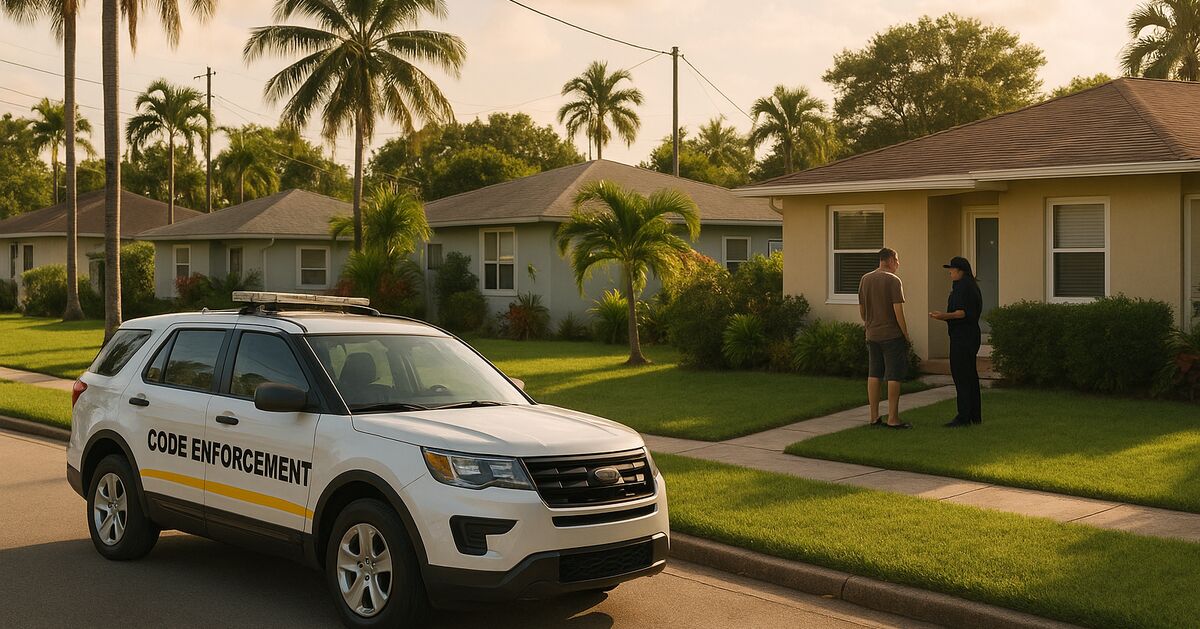
A code enforcement lien sitting on your Sarasota County property can stop a closing cold, kill a refinance, or show up as a surprise on a title search you never saw coming. Understanding how these liens are born, how they grow, and what it genuinely takes to clear them is some of the most practical knowledge a homeowner in this area can have.
What actually triggers a code enforcement case in Sarasota County
Code enforcement cases begin in a handful of ways. A neighbor files a complaint. A county inspector driving by notices something. A permit application triggers a review of the site's existing conditions. Or a routine inspection on an active permit reveals work done elsewhere on the property without authorization.
The most common triggers in Sarasota, Siesta Key, Palmer Ranch, Gulf Gate, and the surrounding communities include:
- Unpermitted structures: sheds, carports, screen enclosures, additions, and accessory dwelling units built without a permit
- Overgrown lots or vegetation that violates county maintenance standards
- Inoperable vehicles stored on a residential property
- Business activity operating from a residential address without approval
- Outdoor storage of materials in ways that conflict with zoning rules
- Fences, walls, or driveways installed without required permits
- Boats or RVs stored in violation of local ordinance
When a case opens, the county sends a Notice of Violation to the property owner of record. That notice describes the violation and sets a deadline, usually between 30 and 60 days, to come into compliance. If you fix the problem before that deadline, the case closes and no lien attaches. The window is real and worth taking seriously.
What happens when you miss the compliance deadline
If you do not correct the violation by the deadline, the case goes before the Sarasota County Code Enforcement Board (or a Special Magistrate, depending on the case type). You receive notice of the hearing date. At the hearing, the county presents evidence, and you have the right to appear and explain your situation.
When the board finds a violation, it issues a formal Order Finding Violation. That order sets a new compliance date. It also establishes a daily fine that begins accruing the moment you miss that second deadline.
Daily fines in Sarasota County can range widely based on the nature of the violation and whether it is a repeat offense. Fines for first-time violations often start in the range of $50 to $250 per day. Repeat violations can jump to $500 per day or more under Florida law. On a serious case left unresolved for months, you can see five figures accumulate quickly.
If the violation remains unresolved after the compliance date passes, the county certifies the fine order. Once certified, it is recorded in the Official Records of Sarasota County. At the moment of recording, it becomes a lien on the property.
How the lien actually attaches to your property
This is the part many homeowners do not fully grasp until they try to sell or refinance.
Under Florida Statute Section 162.09, a certified code enforcement fine becomes a lien against the real property where the violation exists. It attaches the same way a judgment lien or a contractor's lien does, meaning it runs with the land. A title company will find it. A lender will require it cleared. A buyer's attorney will flag it.
The lien is also not limited to just the daily fines. The county can add administrative costs, inspection fees, and in some cases the cost of any abatement work the county itself performed if they moved to correct the violation on your behalf (mowing an overgrown lot is a common example). Abatement costs become part of the lien balance.
One more detail that surprises people: a code enforcement lien in Sarasota County can, in some circumstances, affect other real property you own in the county, not only the parcel where the violation occurred. Florida courts have addressed this inconsistently, but the safest assumption is that the lien is a cloud on title until formally released.
For more background on how unpermitted work gets discovered and what follows, see our post on unpermitted work found by Sarasota County: what happens next and how to get ahead of it.
Why liens show up at the worst possible time
The most common scenario we see across Fruitville, Bee Ridge, The Meadows, Osprey, and Nokomis is a homeowner who bought a property years ago, made some improvements, and never dealt with a permit or a code notice that went to the prior owner's address. The violation festered. Fines accrued. The lien recorded. And now, at the closing table, the title search reveals a balance that has grown into thousands of dollars.
Sometimes the original property owner sold to someone else without clearing the lien, because Florida allows that in some situations. The new owner inherits it. Other times, the homeowner simply did not monitor the county's official records. Mail got lost or went to the wrong address after a move.
It is worth doing a periodic check of your own property's status in the Sarasota County permit and code enforcement records, especially before you list a home, apply for a cash-out refinance, or start a new construction project that might trigger a site review. Our guide to reading a Sarasota County permit history report walks you through how to pull those records and what to look for.
The steps required to get a code enforcement lien released
Getting a lien released is a multi-step process, and there are no shortcuts. Here is the honest sequence:
Step 1: Fix the underlying violation first.
Nothing else moves until the property is actually in compliance. If the lien arose from an unpermitted addition, you need to either retroactively permit and inspect that work, or demolish it. If it was a maintenance issue, the property must meet current standards. The county will conduct an inspection to confirm compliance before any discussion of fines begins.
If the path to compliance involves pulling a permit for work that was already done, you will need a licensed contractor (or qualify as an owner-builder under Florida law) to submit plans, go through review, and pass inspections. That process can take weeks to months depending on the complexity of the work. Our permit expediting services are specifically designed to move that process as efficiently as possible.
Step 2: Request an order acknowledging compliance.
Once the county confirms the property is in compliance, the Code Enforcement Board or Special Magistrate issues an Order Finding Compliance. Get a copy of this in writing. It is the foundation document for the next step.
Step 3: Apply for a lien reduction or satisfaction.
Here is where many homeowners miss an important opportunity. Sarasota County, like many Florida counties, has a formal lien reduction process. If you bring a property into compliance in good faith and can demonstrate hardship, diligence, or extenuating circumstances, the Code Enforcement Board has discretion to reduce the accrued fine balance, sometimes significantly.
You typically submit a written request for a lien reduction hearing. At the hearing, you present your case: when you learned of the violation, what steps you took to correct it, how much time and money you spent on compliance, and why a reduced amount is appropriate. The board weighs several factors including the gravity of the violation, any prior violations on the property, and whether the property was investor-owned or owner-occupied.
Reductions of 50 to 90 percent of the accrued fine are not unheard of in Sarasota County, particularly when the property is a primary residence and the owner acted promptly once they became aware of the problem. There is no guarantee, but not applying for a reduction means paying the full accrued balance.
Step 4: Pay the settled or full amount.
Once the board sets the final amount (either the full balance or a reduced figure), you pay it to Sarasota County. Keep your payment confirmation.
Step 5: Obtain the formal lien release and record it.
After payment, the county issues a Satisfaction of Lien. This document must be recorded in the Official Records of Sarasota County. Until it is recorded, the lien still appears in title searches. Do not assume that payment alone closes the loop. Confirm recording and pull the updated records to verify the lien no longer appears.
For context on how certificate-related issues interact with sales and closings, it is worth reading our post on CO vs. CC in Sarasota County, which covers the certificates that must exist before a property can legally be occupied or conveyed in certain situations.
What this means for a sale or refinance timeline
Real estate closings in Sarasota County are rarely delayed by liens that are already known and actively being resolved. What kills deals is when a lien surfaces at the last minute with no plan.
If you are planning to sell, pull your county records at least 90 days before you list. That gives you time to identify any open code cases, confirm compliance, apply for a reduction, pay, and record the satisfaction before a buyer's title search reveals it. Sixty days is workable. Thirty days is very tight.
If you are refinancing, lenders vary in how they handle code enforcement liens. Some will escrow funds and allow the closing to proceed while the lien is being resolved. Most will not close until a recorded satisfaction exists. Ask your loan officer directly, early.
If you are buying a property in Gulf Gate, Palmer Ranch, or anywhere else in Sarasota County, a thorough permit and lien search should be part of your due diligence, not something you assume the title company will catch in time to do anything about it.
When a stalled permit is part of the picture
Sometimes a code enforcement lien and an expired or stalled permit are tangled together on the same property. The county opens a code case because permitted work was never inspected or closed out. Fines accrue. A lien records. Now you have both a permit problem and a lien problem, and they have to be resolved in the right sequence.
Our post on how to close a stalled permit in Sarasota County when the contractor is gone covers exactly that sequence for permit issues. The short version: you address the permit first (reactivate it, complete any required inspections, close it out), then move to the lien resolution process.
Working with a permit expediter can help
If you are staring at a code enforcement lien and a compliance path that runs through the Sarasota County building department, an experienced permit expediter can meaningfully compress the timeline. Knowing which reviewers to speak with, how to frame a retroactive permit application, which inspections are required, and how to schedule them in the right order makes a real difference, especially when a closing date is on the horizon.
Our team works across Sarasota, Siesta Key, Palmer Ranch, and the surrounding communities every week. If you have a lien situation and are not sure where to start, the FAQ page covers common questions, or you can reach us directly through the contact page for a conversation specific to your property.
A code enforcement lien is not a catastrophe. It is a problem with a defined resolution path. The sooner you start walking it, the better your outcome.
Start here
Tell us about your permit
A real local person reads every request and replies with a clear next step, usually the same business day. No cost, no obligation.