ADUs and in-law suites in Sarasota County: what the permit
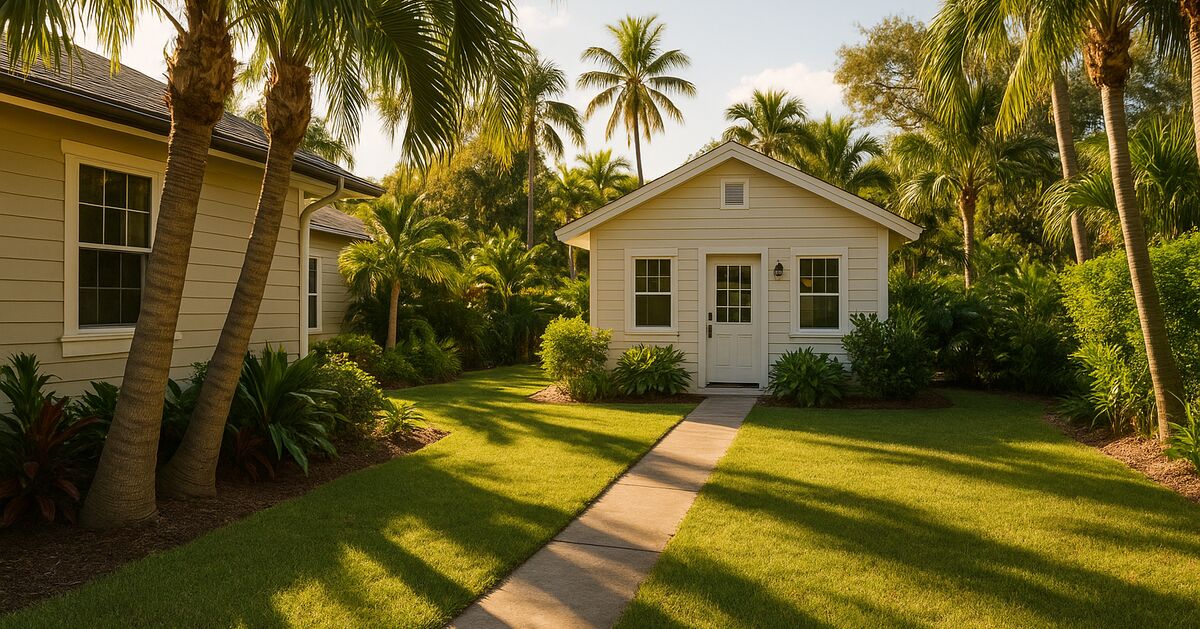
Adding a small apartment behind your main house, or finishing a separate suite for an aging parent, sounds straightforward enough until you actually try to pull the permit. Accessory dwelling units, or ADUs, carry one of the longer checklists in Sarasota County's development code, and the requirements touch zoning, utilities, design, and sometimes the deed to your property. Getting one detail wrong early can push your project back by months. This post walks through every layer of what the county actually requires so you can approach the process with clear eyes.
What counts as an ADU in Sarasota County?
The county treats an accessory dwelling unit as a self-contained residential unit that is secondary to a principal single-family home on the same lot. It must have its own sleeping area, a full kitchen or kitchenette, and a bathroom. That combination, living, cooking, and bathing all under one roof, is what separates a true ADU from a guest room addition or a bonus room.
Common forms include:
- A detached cottage or garage apartment built in the backyard
- A converted garage, workshop, or pool house that gains a kitchen
- An attached addition with a separate entrance, sometimes called an in-law suite or mother-in-law apartment
- An upper-floor apartment above a detached garage
The label matters because each form can trigger different setback standards and different utility connection requirements. A detached unit is reviewed differently than an attached one, even though both count as ADUs for density purposes.
The zoning question comes first
Before anything else, you need to confirm your parcel is in a zoning district that allows an ADU at all. In unincorporated Sarasota County, ADUs are generally permitted by right in single-family residential districts that meet minimum lot-size thresholds, but not every residential zone qualifies. Planned Unit Developments, for instance, often have their own internal rules that override the county baseline. If your home is in a PUD in Palmer Ranch or a master-planned community in The Meadows, your community's governing documents may prohibit ADUs or require additional approvals from a homeowners' association before you even begin the county process.
Gulf Gate and Bee Ridge, with their mix of older single-family neighborhoods and some commercial overlay zones, tend to follow the standard county residential regulations more cleanly, but you still want a zoning verification before you invest in drawings. Our permit expediting services include an upfront zoning check for exactly this reason.
For those inside the City of Sarasota limits (versus the county), the rules differ and fall under city jurisdiction entirely. If you are unsure which office governs your address, the Sarasota County permit expediting location page is a good starting point to orient yourself.
Lot size and minimum size requirements
Sarasota County sets a minimum lot area before an ADU is permitted. As of current regulations, single-family lots generally need to meet a minimum size, often in the range of 7,500 square feet or more depending on the district, though planned development areas may differ. The thinking behind this rule is straightforward: the county does not want a tiny lot overwhelmed by two full dwellings, each generating traffic, parking demand, and utility load.
The ADU itself also has size constraints on both ends. The unit cannot be so large that it starts to function as a second primary residence, and it cannot be so tiny that it fails basic habitability standards. Sarasota County caps ADU size relative to the primary structure, typically expressed as a percentage of the main home's gross floor area, with an absolute upper limit. A 500-square-foot studio counts comfortably under those caps. A 1,400-square-foot two-bedroom apartment attached to a 900-square-foot bungalow is going to raise red flags immediately.
Setbacks and lot coverage
Detached ADUs must meet the rear and side setbacks for accessory structures in your zoning district. These are almost always more forgiving than the setbacks for the primary home, but they still exist and they still matter. A structure built even a foot inside the required setback will fail a zoning review and may require relocation or demolition after the fact.
Lot coverage is the other figure to watch. Sarasota County limits how much of your lot can be covered by impervious surface and by total structure footprint. Adding a detached ADU, especially if it sits on a slab, counts toward that total. Homeowners in Fruitville and Nokomis who have already added a large pool deck or an oversized driveway sometimes discover they have little coverage left for an additional structure, and that reality ends the project before it starts.
The smart move is to have a surveyor run the numbers on existing lot coverage before you commission full architectural drawings.
Owner-occupancy and rental restrictions
This is the requirement that surprises people the most. Sarasota County has historically required that the owner of the property occupy either the primary dwelling or the ADU as their principal residence. The intent is to prevent standard single-family neighborhoods from quietly becoming investment-only rental properties. If you are buying a property purely as an investor with no intention of living on site, an ADU is not a straightforward path.
If you do intend to rent the ADU out, short-term vacation rental rules layer on top of county zoning. Sarasota County and the State of Florida have ongoing and evolving regulations on short-term rentals, and the rules that apply to an ADU rented for 30 days or more can differ meaningfully from those governing platforms like Airbnb or VRBO. Get clarity on this before you build the unit around a short-term rental model.
Utility connections and infrastructure
A self-contained dwelling unit needs its own water and sewer connections, or at minimum a clear tie-in to the primary home's existing connections in a way the county accepts. Sarasota County development staff will look closely at whether your existing septic system (if applicable) has sufficient capacity for a second dwelling unit. Many older properties in Osprey and Nokomis are on septic, and adding a second kitchen and bathroom to the system's load often requires a septic upgrade or a new drain field, which is its own permit process and its own cost.
Impact fees are also triggered when you add a new dwelling unit. The county charges fees based on the increased demand your new unit places on roads, schools, parks, and utilities. These are not trivial amounts, and they are due at permit issuance, not at completion. Our post on Sarasota County impact fees walks through exactly how those fees are calculated and what you can expect to pay.
If your property is on public water and sewer, you will likely need a utility capacity confirmation from Sarasota County Utilities before the building department issues the permit. A new dwelling unit is treated almost like a new address for billing and capacity planning purposes.
What the permit application itself requires
Once you have confirmed zoning eligibility, lot coverage headroom, and utility capacity, the actual permit application involves several document sets. Expect to submit:
- A site plan drawn to scale showing the ADU footprint, setbacks, driveway, and existing structures
- Architectural drawings with floor plans, elevations, and sections prepared or signed by a Florida-licensed designer or architect (required when the structure exceeds certain thresholds)
- A foundation plan and structural details
- Electrical, mechanical, and plumbing plans
- Energy compliance documentation showing the unit meets Florida Building Code Chapter 13 energy standards
- A survey showing current lot dimensions and any easements
The Sarasota County building department runs concurrent building and zoning review on most residential projects. That means both the building code compliance and the zoning compliance are checked in the same review cycle, which is efficient when your application is complete but doubles the ways it can be rejected if something is missing. For a deeper look at how that dual-review process works, see our post explaining Sarasota County's concurrent review process.
Incomplete submittals are the single most common reason ADU permits get kicked back. The county will issue a Request for Additional Information, or RAI, that pauses your review clock until you respond. One missing detail can cost three to four weeks. Our team at Sarasota Permits handles the preparation and submittal checklist to minimize that risk.
The contractor and license piece
Unless you are pursuing an owner-builder permit, your ADU work will need to be performed by licensed contractors. Sarasota County requires that general contractors, electricians, plumbers, and mechanical contractors hold active licenses and be registered with the county before pulling permits. A licensed general contractor will typically pull the main building permit and then subcontract the trades, each of whom must also be registered.
If you are considering the owner-builder route, understand that taking on that designation means you personally assume responsibility for the quality of the work and for satisfying all inspections. The owner-builder permit post on this blog lays out what that actually means in practice, and it is worth reading before you decide.
Inspections along the way
An ADU is a full residential structure, so it goes through the same inspection sequence as a new home, just at a smaller scale. Expect inspections at foundation, framing, rough electrical, rough plumbing, rough mechanical, insulation, and final stages. A failed inspection does not kill the project, but it adds time and sometimes cost if corrections require reopening finished work. Understanding how Sarasota County handles inspection failures and what triggers them helps you and your contractor stay ahead of common deficiencies.
Final inspection approval is what triggers your certificate of occupancy, or CO. Without a CO, the unit is not legal to occupy or rent. This is a hard stop.
Deed restrictions and HOA approval
The county permit is not the only gate you have to pass through. If your neighborhood has a homeowners' association, review the governing documents carefully. Many communities across Siesta Key, Palmer Ranch, and The Meadows have CC&Rs that either prohibit detached accessory structures entirely or impose design standards like matching rooflines, materials, and colors to the primary home. Some HOAs require an architectural review approval letter before you can even submit to the county.
Getting county approval first and HOA approval second is the wrong order. It is also a waste of money. Confirm both paths are open before you pay for architectural drawings.
How long does all of this take?
For a well-prepared ADU application in unincorporated Sarasota County, expect the permit review process to take anywhere from four to ten weeks depending on current review volume and whether the county issues an RAI. The construction itself, for a modest detached unit of 400 to 600 square feet, typically runs three to six months depending on contractor availability and material lead times. From the day you decide to build to the day you receive your CO, a twelve to eighteen month timeline is realistic for most homeowners who are starting from scratch.
If timeline is a concern, our FAQ page covers common questions about what can be done to speed the process, and our team is happy to walk through your specific situation.
Where to start if you are ready to move forward
The best first step is a pre-application conversation, either directly with Sarasota County's development services staff or with a permit expediter who knows the local process well. Bring your property address, a copy of your survey if you have one, and a rough idea of what you want to build. From that conversation you can confirm zoning eligibility, identify any obvious obstacles, and get a realistic sense of what the application will need.
Whether your property is in Osprey, Bee Ridge, Gulf Gate, or anywhere else in the county, the framework described above applies. The specifics shift slightly with each neighborhood and zoning district, so local knowledge genuinely matters here.
You can explore all the areas we serve on our locations page, or reach out directly if you want to talk through your project. An ADU is one of the more complex residential permits Sarasota County processes, but with the right preparation it is absolutely achievable.
Start here
Tell us about your permit
A real local person reads every request and replies with a clear next step, usually the same business day. No cost, no obligation.