Sarasota County inspection failures: causes and how to
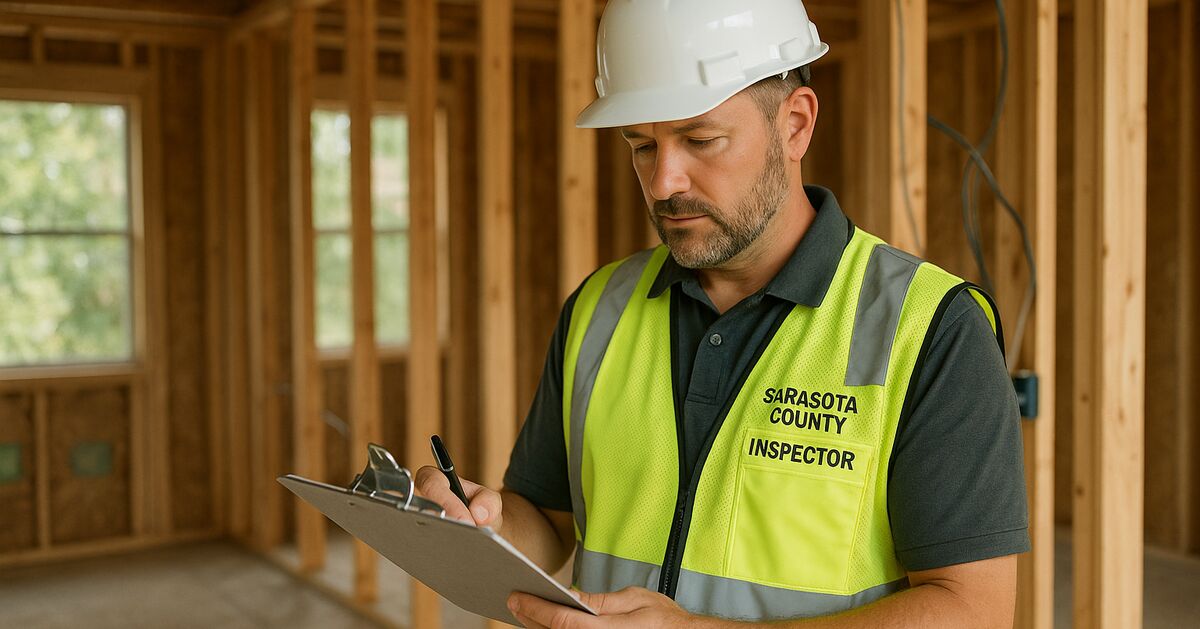
Your inspector showed up, walked through the work, and left a correction notice instead of a green tag. It feels like a gut punch, especially if you have contractors waiting, schedules stacked up, or a closing date looming. But a failed inspection in Sarasota County is not the end of the road. It is a specific list of problems that need specific fixes, and the re-inspection process is more straightforward than most homeowners realize.
This post walks through the most common triggers for inspection failures, how the county's correction process works, and the practical steps to get back on the calendar as fast as possible.
Why inspections fail: the big picture
Inspectors are not trying to create problems for you. Their job is to compare what was built against the approved permit drawings and the Florida Building Code. When those two things don't match, the inspection fails. It's almost always that simple.
Failures cluster into a few broad categories: work that was done differently from the approved plans, work that was done correctly but is not ready to be inspected (covers installed too early, for example), administrative issues, and genuine code violations. Knowing which bucket your failure falls into shapes how quickly you can resolve it.
If you are still in the early stages of a project and want to understand the full permit journey, the Sarasota County permit expediting services we offer include guidance from application through final inspection, so you're never guessing about what the inspector expects to see.
The most common reasons Sarasota County inspections fail
1. Work covered before it was inspected
This is probably the single most frequent failure trigger in residential construction. Framing, rough electrical, rough plumbing, and HVAC rough-in all require inspection before the walls or ceilings close over them. If drywall goes up before the rough-in inspection passes, the inspector cannot see the work. The result is almost always a failed inspection and a requirement to open the wall or ceiling to expose what's hidden.
The fix sounds painful, but it's usually targeted. Inspectors will often tell you precisely which section needs to be uncovered rather than requiring demolition of an entire wall.
2. Work that doesn't match the approved plans
Your permit was issued based on a specific set of drawings or a scope of work. If the actual construction deviates from those drawings, even in ways that seem minor, the inspector will note it. Common examples include:
- Window or door rough opening sizes that differ from what was submitted
- Electrical panel location or circuit arrangement that doesn't match the approved layout
- Structural members with different dimensions than the engineered plans specify
- HVAC equipment with a different BTU rating or installation configuration than what was permitted
If the deviation is minor and still code-compliant, you may be able to submit a plan revision to bring the permit into alignment with what was actually built. If the deviation is more significant, it may require the contractor to restore the work to match the original plans. Either way, address this with your contractor immediately rather than assuming the inspector won't notice next time.
3. Missing required components
Inspectors work from checklists tied to the type of inspection. A framing inspection, for instance, will look for hurricane strapping at every rafter-to-plate connection, proper header sizing over openings, fire blocking in the right locations, and more. If any required component is simply absent, the inspection fails.
This is actually good news in a way: missing items are usually easier and faster to correct than items that were done wrong. You add the missing component and call for re-inspection.
4. The permit card or approved plans are not on site
Florida law requires the permit card and a copy of the approved plans to be on the job site and available to the inspector at every inspection. If those documents aren't present, the inspector may refuse to conduct the inspection at all and will mark it as a failed or incomplete visit. This is a frustrating and entirely avoidable failure, but it happens regularly, especially on larger projects where paperwork moves around between the office and the field.
Keep a dedicated job-site folder with the permit card, all approved plan sets, and any revision approvals. Leave it in a predictable spot.
5. Safety hazards or code violations
If an inspector finds a genuine safety issue, such as improperly supported electrical wiring, lack of arc-fault or ground-fault protection where the code requires it, missing smoke or CO detector locations, or structural work that appears unsafe, the inspection will fail and may trigger additional review. These are the failures that take the most time to resolve because the correction itself can be complex.
Sarasota County inspectors generally explain their findings clearly and will reference the specific Florida Building Code section that applies. If you don't understand the citation, ask. Getting clarity on site is much better than guessing later.
6. Inspection requested for the wrong stage
Occasionally a homeowner or contractor calls for the wrong type of inspection. For example, requesting a "final" inspection when only the rough-in is done, or scheduling a slab inspection before the forms and rebar are ready. The inspector arrives, finds the work isn't at the stage the permit requires for that inspection type, and marks it accordingly. Double-checking the inspection type before you call prevents this entirely.
What the correction notice actually tells you
When an inspection fails in Sarasota County, the inspector leaves a correction notice (sometimes called an inspection result or field notice) at the job site. This document is important. It lists:
- The specific items that failed, often with a code reference
- Any items that were approved (partial passes are possible on complex inspections)
- Whether re-inspection requires any special steps
Read it carefully before you do anything else. Some corrections are simple one-line items you can resolve in an afternoon. Others may require engineering letters, product data sheets, or even revised permit drawings. Knowing what you're dealing with saves time.
If you're managing a project in a busier community like Palmer Ranch or Siesta Key, where construction activity is heavy and contractor schedules are tight, getting a clear read on the correction notice as quickly as possible keeps your project moving.
How to schedule a re-inspection in Sarasota County
Once the corrections are made, you need to get back on the county's inspection calendar. Here's how the process generally works:
Online scheduling through the Sarasota County portal. Most residential re-inspections can be scheduled through the county's online permitting portal. You'll need your permit number and the inspection type. Re-inspections are typically available one to three business days out depending on the inspection type and current workload.
Phone scheduling. You can also call Sarasota County Development Services directly to schedule. Have your permit number and the specific inspection type ready. Phone scheduling is helpful if you have questions about which inspection type to request or if there's any confusion about the correction notice.
Same-day or next-day availability. Sarasota County does offer limited same-day inspection availability for certain inspection types when you call before the morning cutoff (typically 7:00 a.m.). This is worth trying if your correction was minor and you were able to resolve it the same day the failure occurred.
Re-inspection fees. Be aware that Sarasota County charges a re-inspection fee for failed inspections. This fee is assessed when an inspection fails and a return visit is needed. The amount varies depending on the type of permit and the stage of construction. Check the current fee schedule on the county's website or call Development Services for the current figure, as fees are updated periodically.
Tips for passing re-inspection the first time
A few habits dramatically improve the odds of passing on the re-inspection visit:
- Correct every item on the correction notice, not just the obvious ones. Inspectors expect everything on the list to be addressed when they return. Fixing only part of the list and hoping the rest goes unnoticed is not a strategy.
- Don't cover new work before it's approved. If you opened a wall to make a correction, resist the urge to close it back up before the re-inspection confirms it passes.
- Have your contractor on site if possible. For complex corrections, having the person who did the work present to answer questions and make any last-minute adjustments can make the difference between a pass and another failure.
- Make sure the correction notice is also on site. Some inspectors want to see the original correction notice when they return so they can verify each item. Keep it in that job-site folder with your permit card.
- Request the same inspector if possible. If you have a specific question about what the original inspector expected, requesting the same inspector for the re-inspection can simplify the conversation. This isn't always possible with scheduling, but it's worth asking.
When a failure points to a bigger problem
Occasionally an inspection failure reveals that there's a disconnect between what was permitted and what was actually planned or built, and fixing it is not as simple as correcting a single item. This can happen when a contractor substituted materials without submitting a change, when work was added to the scope mid-project without a permit amendment, or when the original permit application contained errors.
In these situations, you may need to submit revised plans or additional documentation to the county before the re-inspection can proceed. This is where having someone familiar with Sarasota County's permitting process on your side is genuinely useful. Getting the paperwork right the second time matters. For more on how to avoid permit submission problems in the first place, our post on why Sarasota County permits get kicked back is worth a read before you resubmit anything.
It's also worth understanding that Sarasota County and the City of Sarasota are separate jurisdictions with separate processes. If your property is within city limits, the City of Sarasota's Building Department handles inspections, not the county. If you're not sure which office is responsible for your address, our post on Sarasota County vs City of Sarasota permitting lays it out clearly.
Don't let the permit lapse while you work on corrections
One thing that catches homeowners off guard: if corrections take a long time and no approved inspection occurs within a certain window, your permit can go inactive. Florida statute and county rules require work to be active and progressing. If you're dealing with a complicated correction and time is stretching out, check the expiration date on your permit and, if needed, request an extension before it lapses rather than after. A lapsed permit creates a separate set of problems that take more time and money to resolve than simply staying ahead of the deadline. Our post on what to do when a building permit expires in Florida walks through that situation in detail.
How we help with re-inspections and corrections
Homeowners in Gulf Gate, Bee Ridge, Fruitville, and throughout the county call us when their project hits a snag. A failed inspection is one of the most common snags there is. We help by reviewing the correction notice, identifying exactly what documentation or plan revisions are needed before re-inspection, and coordinating with the county to get the project moving again without unnecessary delays.
You don't have to navigate the correction and re-inspection process alone, especially when contractor schedules and your own deadline pressure are already high. Reach out to us and we'll help you figure out the fastest, most straightforward path to a passing inspection.
For more answers to common permitting questions, the FAQ page covers a wide range of situations we hear about regularly from homeowners across the county.
A failed inspection stings, but it's a fixable problem. Read the correction notice carefully, make every correction on the list, get back on the calendar promptly, and keep your paperwork on site. Most re-inspections pass cleanly when homeowners and contractors treat the correction notice as the specific checklist it's meant to be.
Start here
Tell us about your permit
A real local person reads every request and replies with a clear next step, usually the same business day. No cost, no obligation.