The owner-builder permit in Florida: what you take on when
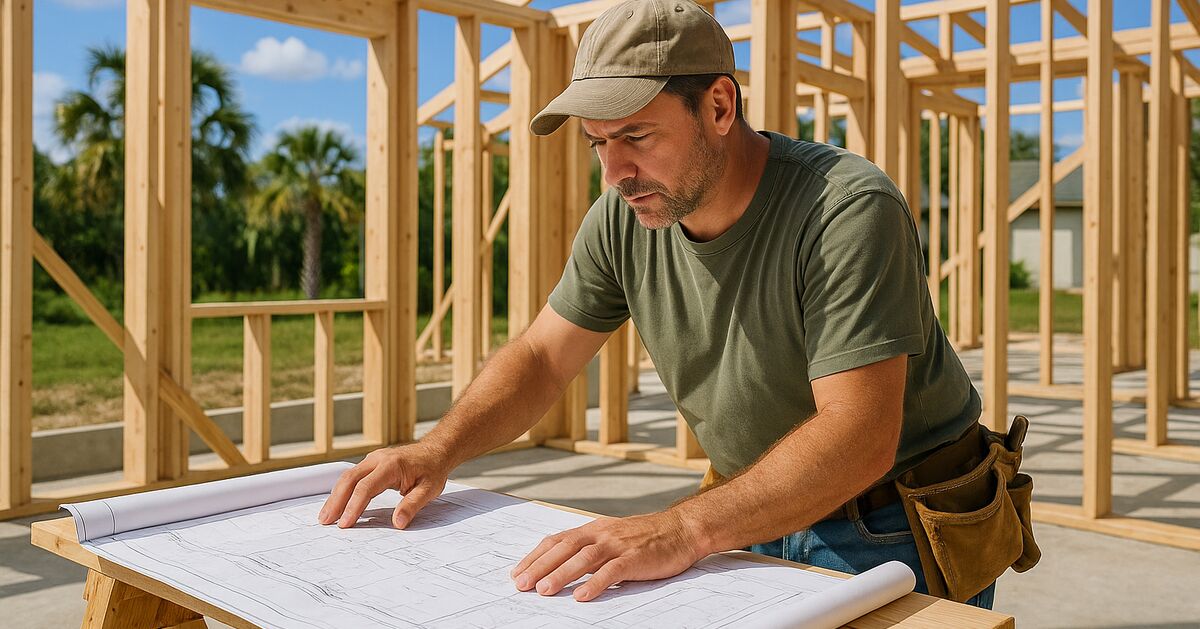
Skipping the licensed contractor and pulling your own permit can save thousands of dollars, but Florida law treats you as the contractor the moment you sign that owner-builder disclosure, and that changes everything.
Many homeowners in Sarasota, Palmer Ranch, and Osprey discover this only after they're already mid-project. This post walks through exactly what the owner-builder path involves, where it makes sense, where it gets people into trouble, and what you need to know before you put your name on that application.
What an owner-builder permit actually is
Florida Statute 489.103(7) allows a homeowner to act as their own general contractor for work on property they own and intend to occupy. You apply for the building permit yourself, you are listed as the contractor of record, and you take on the legal and financial responsibilities that would otherwise fall on a licensed professional.
The county or city building department issues the permit to you directly. You are responsible for hiring and supervising any subcontractors, scheduling all inspections, and making sure every phase of work meets the Florida Building Code. If something fails an inspection, it is your problem to fix. If a subcontractor gets hurt on your job site, workers' compensation liability may fall on you. If the work causes a fire or structural failure years later, you are the one who signed off on it.
None of that is designed to scare you away from the option. It is designed to make sure you walk in with open eyes.
The disclosure form: the part most people skim
Before Sarasota County or the City of Sarasota will issue an owner-builder permit, you must sign a state-mandated disclosure statement. The disclosure is not a formality. It spells out, in plain language, several things that carry real weight:
- You may not hire unlicensed subcontractors.
- You are personally liable for injuries on the job site if you do not secure workers' compensation coverage.
- Your homeowner's insurance policy may not cover construction-related losses during the project.
- If you sell the home within one year of completing the work, Florida law presumes you built it for sale, which is a violation of the owner-builder exemption and can expose you to contractor licensing penalties.
- You may be responsible for any financial harm that results from defective construction.
That last point about selling is the one that catches people in The Meadows and Gulf Gate most often. A homeowner finishes a kitchen remodel under an owner-builder permit, gets a job offer in another city three months later, and suddenly their real estate attorney is flagging a compliance issue. The one-year rule is real and it is enforced.
What you are actually responsible for managing
When you sign as owner-builder, the job of general contractor lands on your desk. That includes more than most people picture.
Hiring only licensed subcontractors. Every trade that requires a license in Florida, electricians, plumbers, HVAC technicians, roofers, still needs to be licensed when you hire them as subs on your owner-builder project. The owner-builder exemption does not let you bring in an unlicensed buddy to do the wiring. If you do, you are exposing yourself to fines and the work will not pass inspection anyway.
Scheduling and passing all required inspections. Depending on the scope of work, a single project might require a foundation inspection, framing inspection, rough electrical, rough plumbing, insulation, and final inspection, among others. Missing an inspection, or having one fail and not following up, can leave you with an open permit that clouds your title for years.
Keeping the permit active. Florida permits expire if work is not inspected within 180 days of issuance or within 180 days of the last approved inspection. As your own contractor, you are responsible for tracking those deadlines. An expired permit means you may need to re-apply, pay new fees, and in some cases expose completed work for re-inspection. If this happens to you, read through what to do about a building permit that has expired in Florida before you panic.
Workers' compensation exposure. This is the sleeper risk. If you hire a subcontractor who does not carry workers' comp and that person is injured on your property, you could be held liable for their medical bills and lost wages. Always ask for a certificate of insurance before any sub sets foot on your property, and confirm the policy is current.
Where owner-builder permits make the most sense
The owner-builder path is not a bad idea across the board. For homeowners with genuine construction knowledge, steady time to manage the project, and a property they plan to stay in for years, it can work well.
The situations where it tends to go smoothly:
- Smaller, well-defined scopes like a bathroom addition, a detached storage structure, or a straightforward fence project where the inspection schedule is simple and the trades involved are limited.
- Owners who have a construction background and understand what inspectors are looking for at each phase.
- Projects with a long time horizon where there is no pressure to sell or refinance quickly, removing the one-year resale risk from the equation.
- Rural or semi-rural parcels in areas like Fruitville or Nokomis where the property may have fewer deed restrictions and the work is more straightforward.
If you are not sure whether your specific project even requires a permit in the first place, it is worth reviewing a Sarasota homeowner's guide to which projects need a permit before you go further.
Where it tends to go wrong
The owner-builder permit runs into trouble most often in a few predictable ways.
Underestimating the complexity of the permit application itself. The application for anything beyond a minor project requires site plans, construction drawings, energy calculations, and in some cases structural engineering. The documents have to meet specific format and content requirements that vary depending on whether you are working in unincorporated Sarasota County or inside the City of Sarasota limits. Those are two different offices with two different processes, a distinction that confuses a lot of homeowners. Understanding which office reviews your permit matters before you even pick up an application.
Delays from incomplete submittals. Building departments issue comment letters when a permit application is missing information or contains errors. Each round of comments and corrections adds weeks to your timeline. A licensed contractor or permit expeditor who does this work daily knows exactly what each reviewer is looking for. An owner-builder doing it for the first time often goes through two or three rounds of corrections on a straightforward project.
Insurance gaps during construction. Many standard homeowner's insurance policies have exclusions for construction activity. If a fire starts during a renovation and the insurer determines that active construction was occurring without proper notification, you may face a coverage dispute at the worst possible time. Call your insurer before the project starts, not after.
Subcontractor management. Coordinating trades is a full-time job on anything but the smallest project. Scheduling conflicts, no-shows, and sequencing errors (having the drywall hung before the rough electrical is inspected, for example) can cascade into costly delays or failed inspections.
How owner-builder works differently across Sarasota communities
The permit office you deal with depends on where your property sits, not just which city name you use in your address. Properties in Siesta Key, Bee Ridge, Gulf Gate, The Meadows, Palmer Ranch, and parts of Osprey fall under Sarasota County's jurisdiction. Properties inside the city limits of Sarasota go to the City of Sarasota Building Department. The application forms, fee schedules, and review workflows are different between the two.
Some communities also carry deed restrictions or HOA requirements that layer on top of the government permit process. Getting a county permit does not mean your HOA has approved the work. In Palmer Ranch especially, where many subdivisions have active architectural review committees, you need both approvals before construction starts.
If you are in Nokomis or parts of Osprey, note that those areas fall under Sarasota County but sit near the boundary with Venice/North Port, so confirming jurisdiction before you apply is always worth the five-minute phone call.
When it makes sense to get help with the permit side
Some owner-builders are completely capable of managing the construction. What slows them down is the paperwork: assembling the correct drawings, submitting to the right office, responding to comment letters, and tracking inspection milestones. That is where a permit expeditor can take a real burden off your plate without replacing you as the owner-builder of record.
You stay the owner-builder. You keep the cost savings on the contractor side. The expeditor handles the back-and-forth with the building department, makes sure the submittal is complete from the start, and flags any issues before they cost you time. Our permit expediting services are designed exactly for this kind of situation, homeowners who know what they want to build but do not want the permit process to become a part-time job.
We work with homeowners across all of our service areas, including those tackling owner-builder projects in Sarasota, Siesta Key, Palmer Ranch, Bee Ridge, The Meadows, Fruitville, Gulf Gate, Osprey, and Nokomis.
A few questions worth asking yourself before you apply
Before you decide to go the owner-builder route on your next project, it is worth sitting with a few honest questions:
- Do I have enough time in my schedule to manage subcontractors, attend inspections, and respond to permit comments within the required windows?
- Am I confident I understand the Florida Building Code requirements for this type of work, or am I guessing?
- Is there any chance I might need to sell or refinance this property within the next twelve months?
- Have I contacted my homeowner's insurer to confirm my coverage during construction?
- Do I know which subcontractors I will use, and can I confirm they are licensed and insured?
If the answers to any of those give you pause, it does not mean you cannot do the project. It means you should think carefully about which parts of the process you want to handle yourself and which parts are worth handing off.
The bottom line
The owner-builder permit is a legitimate and legal path for Florida homeowners, and plenty of people use it successfully every year. The key is understanding that the savings on the contractor side come with real obligations on the legal, insurance, and project management side. Walking in prepared is the difference between a project that goes smoothly and one that stalls at inspection or creates a title problem years later.
If you have questions about the owner-builder process in Sarasota County or the City of Sarasota, we are happy to talk through your specific situation. Reach out to our team and we can help you figure out the right approach for your project before you sign anything.
Start here
Tell us about your permit
A real local person reads every request and replies with a clear next step, usually the same business day. No cost, no obligation.