What Sarasota County requires to permit a fence: height, visibility, materials, and HOA limits
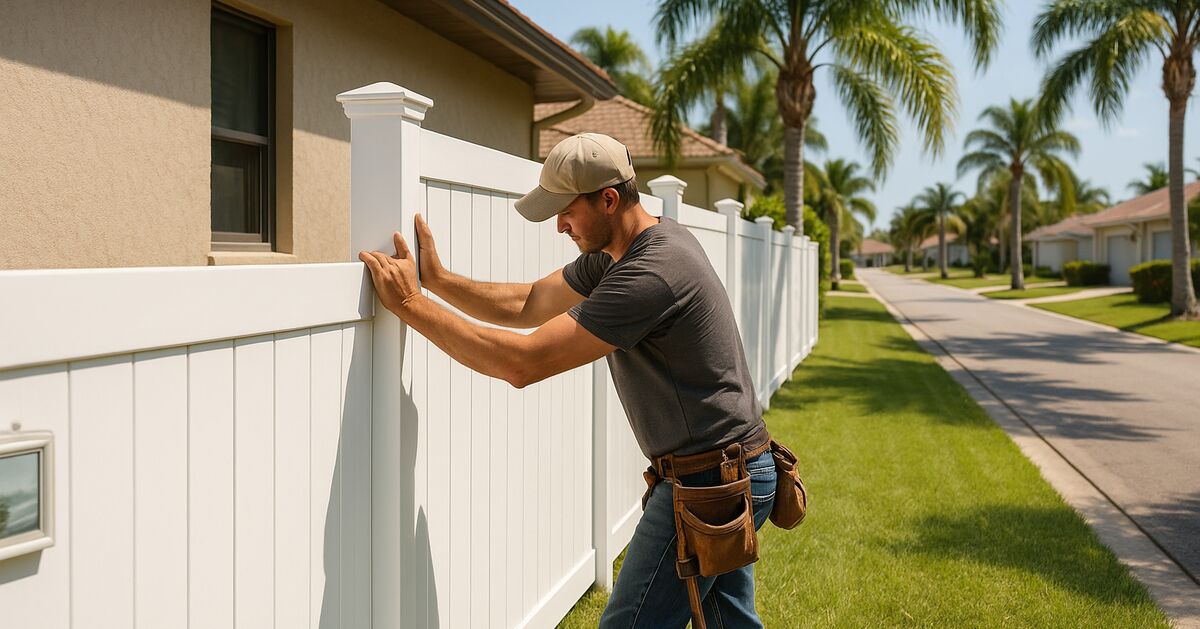
Your neighbor's new fence looks great, you want one just like it, and your HOA already gave you the green light. That combination feels like a clear path forward. It isn't, at least not by itself. Sarasota County has its own fence permitting requirements that exist independently of whatever your homeowners association says, and building without satisfying both can mean a stop-work order, a forced teardown, or a problem that surfaces at closing years later.
This guide walks through the county's rules in plain language: when a fence permit is required, how height limits actually work (they vary by location on your lot), what the corner visibility rules mean in practice, which materials are and aren't allowed, and why passing your HOA review is only half the job.
When does a fence actually need a permit in Sarasota County?
Not every fence triggers a permit, but most do. In unincorporated Sarasota County, a building permit is generally required for any fence regardless of height, material, or location on the lot. The permit process lets the county verify zoning compliance, confirm the fence isn't encroaching on easements or rights-of-way, and check that the installation meets structural standards.
A few situations catch homeowners off guard:
- Replacing an existing fence. If you're tearing out the old one and putting up a new one, that's a new installation and requires a permit, even if you're matching the old fence exactly.
- Adding a gate. A gate in an existing fence can trigger a permit depending on its size and location.
- Fences around pools. Pool barrier fences carry their own requirements and are reviewed with special care. If you're also permitting a pool, the pool permit process in Sarasota County has a separate layer of review.
- Fences on corner lots. These are flagged automatically for sight-triangle review (more on that below).
If you're not certain whether your project needs a permit, the [FAQ page]((/faq)) covers common threshold questions, or you can reach out directly through the contact page.
Height limits: the front yard versus the rest of the yard
The single most common fence mistake in Sarasota County is treating the whole lot as one zone. The rules split your property into distinct areas, and the permitted height depends on where the fence sits.
Front yard: In most residential zoning districts, fences in the front yard are limited to four feet in height. This applies to the area between the front building line and the street. The intent is to preserve neighborhood sightlines and visual openness along the street frontage. A solid six-foot wood privacy fence running across the front of a home in The Meadows or Bee Ridge will almost certainly fail review.
Side and rear yards: In most residential districts, fences up to six feet are permitted in side and rear yards without special approval. Some zoning categories allow up to eight feet for specific uses, but that's not typical for standard single-family lots.
At the transition point: The tricky measurement is where front yard ends and side yard begins. The county uses the front building setback line as the dividing boundary, not the front corner of your house. That distinction matters if your home is set back at an angle or if you have a deep setback. Getting this wrong is one of the most common reasons fence permit applications are kicked back during initial review.
Heights are measured from the finished grade at the base of the fence, not from the top of a footer or from the lowest adjacent ground. If your lot slopes, this creates situations where the fence is technically under the limit on one side but over it on the other. Your installer should account for that and your plans should reflect it.
Corner lot sight triangles: the rule that trips up the most homeowners
If your property sits on a corner, expect extra scrutiny. Sarasota County enforces a corner visibility triangle (sometimes called a sight triangle or clear-sight zone) at intersections to protect driver and pedestrian safety. Within this triangle, fences, walls, landscaping, and other vertical obstructions must be kept below a certain height, typically around 30 inches above finished grade.
The triangle is measured from the intersection of the two right-of-way lines. The county uses specific dimensions, and those dimensions can vary depending on road classification and speed limit. A fence that respects the four-foot front yard rule can still fail if part of it falls inside a sight triangle.
Homeowners on corner lots in Gulf Gate, Palmer Ranch, or along collector roads in Fruitville should pay particular attention to this. A corner lot permit application that doesn't show the sight triangle drawn on the site plan will typically be flagged in review before it even gets to a field inspection.
If you want a solid fence along a corner frontage and your lot puts much of the yard inside the triangle, your options are usually a lower fence within the triangle, an open picket design that preserves sightlines, or a combination of both. Your permit expediter can help you work through which approach gets approved most cleanly.
Setbacks: where the fence can and can't go
A fence generally needs to be placed on your property, but the county also has setback rules that keep fences away from certain features:
- Right-of-way: Fences must not encroach into the public right-of-way. This is not necessarily the same as your property line, and the difference catches homeowners regularly. The right-of-way often extends several feet beyond the edge of pavement, meaning your actual property line may be closer to the road than you expect.
- Utility easements: A fence can typically cross a utility easement, but the county and utility providers can require removal if they need access. Some easement agreements specifically prohibit solid fences. Your survey will show easements, and your permit plans should reference them.
- Waterbodies and wetlands: Properties near mangroves, tidal areas, or wetlands in Osprey, Nokomis, or along canals on Siesta Key may face additional setback requirements from the resource protection overlay, not just standard zoning rules.
Getting a current survey before you submit is one of the highest-value steps you can take. It tells you exactly where the property lines are, what easements cross the lot, and where the right-of-way boundary sits. Without it, your site plan is essentially a guess.
Material standards: what the county will and won't approve
Sarasota County's Land Development Regulations place some limits on fence materials in residential districts. The specifics can depend on your zoning classification, but here are the general principles:
Typically permitted:
- Wood (privacy boards, split rail, picket)
- Vinyl and PVC (must be of a grade suitable for structural use)
- Aluminum (powder-coated ornamental styles are common in Palmer Ranch and The Meadows)
- Chain link (generally permitted in rear and side yards; some districts restrict it in front yards)
- Wrought iron and similar metal
Materials that require additional review or are restricted:
- Barbed wire is generally prohibited in residential zoning. It can appear in agricultural or certain industrial zones, but not in standard single-family neighborhoods.
- Razor wire is similarly off-limits in residential areas.
- Chicken wire and similar lightweight mesh products are not typically acceptable as primary fence materials in residential districts.
- Solid masonry walls (concrete block, stucco-coated block) are treated differently from standard fences and have their own structural requirements. If you want a masonry wall rather than a fence, expect a more detailed structural review.
The permit application asks for material type and construction method. Vague answers like "wood fence" without specifying post size, board thickness, and attachment method often generate a comment requesting more detail. Submitting a clean set of plans with material specs upfront shortens the review cycle significantly. The permit expediting services we offer include exactly this kind of plan preparation to avoid back-and-forth.
The HOA approval problem: why it isn't enough
This is the point many homeowners miss, so it's worth being direct about it.
Your HOA has authority over aesthetics and community standards within the association's private governing documents. Sarasota County's building and zoning codes are public law. They operate on completely separate tracks, and approval from one does not substitute for approval from the other.
In practice, this means:
- Your HOA can approve a six-foot solid vinyl fence in your front yard. The county will still deny the permit because front yard height is capped at four feet.
- Your HOA can approve a fence that encroaches into a utility easement. The county's permit reviewer will still flag it.
- Your HOA can approve materials the county restricts. The permit still won't issue.
The reverse is also true. Getting a county permit does not override your HOA's rules. You need both, and they need to agree with each other. Homeowners who skip the county permit because "the HOA already approved it" end up with unpermitted work. That unpermitted work appears as an open flag when the house is sold, and resolving it after the fact often costs more than doing it right initially.
If you've already had a conversation with your HOA and received approval, that's a productive starting point. The next step is making sure the proposed fence also meets county standards before you order materials. The permit expediting process typically starts with a zoning check for exactly this reason.
What the county checks during review and inspection
When you submit a fence permit application in unincorporated Sarasota County, the reviewer typically checks:
- Site plan accuracy. Does the plan show the fence location relative to property lines, easements, rights-of-way, and structures? Is the lot drawn to scale?
- Height compliance. Are front yard and rear/side yard sections correctly labeled and within the applicable limits?
- Sight triangle. For corner lots, is the triangle shown and is the fence appropriately positioned?
- Material specifications. Are material type and structural specs described?
- Contractor licensing. Is the installing contractor licensed and registered with the county? (DIY installations by the property owner under owner-builder status are possible but come with their own requirements.)
After approval and installation, a field inspection confirms that what was built matches the approved plans. Common inspection issues include fence posts placed too close to the property line, height measurements that don't match the plan, and material substitutions the homeowner made in the field without an amended permit. The guide to inspection failures and reschedules covers what to do if you get a failed inspection and need to correct and rebook quickly.
Local variations worth knowing
If your property is within the City of Sarasota limits rather than the unincorporated county, the rules differ and the permit is pulled through the City's Building Department, not the county. Many neighborhoods that feel like "Sarasota" are actually in unincorporated county jurisdiction. If you're unsure which office handles your address, the locations page can help you identify where your permit needs to go.
On Siesta Key, many residential parcels are in unincorporated county, but the barrier-island context and proximity to water can create additional overlay requirements. Fences near the water on Siesta Key should be reviewed with the county's resource protection rules in mind, not just standard residential zoning.
In communities like Osprey and Nokomis, where lots occasionally abut conservation lands, tidal areas, or county-maintained drainage infrastructure, setback questions around easements tend to come up more often than in inland neighborhoods.
How to move through the process cleanly
Here's a straightforward sequence that avoids the most common delays:
- Get a current survey. If you don't have one or yours is more than a few years old, get an updated one. Know where your property lines, easements, and right-of-way boundaries actually sit.
- Check your zoning district. Your zoning classification controls which height rules apply to your lot. You can look this up through Sarasota County's online GIS portal or ask during a pre-application meeting.
- Confirm with your HOA. Get their standards in writing and compare them to county rules before finalizing your design.
- Prepare a site plan. This doesn't have to be a professional architectural drawing for a simple fence, but it does need to show dimensions, setbacks, material notes, and, for corner lots, the sight triangle.
- Submit and pay the permit fee. Fence permit fees in Sarasota County are typically modest compared to larger projects, but they vary based on linear footage and sometimes material type.
- Schedule your inspection. Once the permit is approved and work is complete, request the inspection. Don't skip this step: a permit with no final inspection is treated as incomplete and creates the same problem as no permit at all.
If any step in that sequence feels uncertain, working with a local permit expediter can compress the timeline and reduce the back-and-forth with the county. That's particularly useful for corner lot projects, properties near water, or any fence installation that involves a zoning overlay or easement complication.
For a broader look at the full range of permit types we help with across the area, the about page describes how the service works and who it's designed for.
A fence is one of those projects that feels simple right up until it isn't. Getting the county piece right from the start protects your investment, keeps your relationship with your HOA clean, and means the fence is a selling point rather than a disclosure problem when you eventually move.
Start here
Tell us about your permit
A real local person reads every request and replies with a clear next step, usually the same business day. No cost, no obligation.