Unpermitted work found by Sarasota County: what happens next and how to get ahead of it
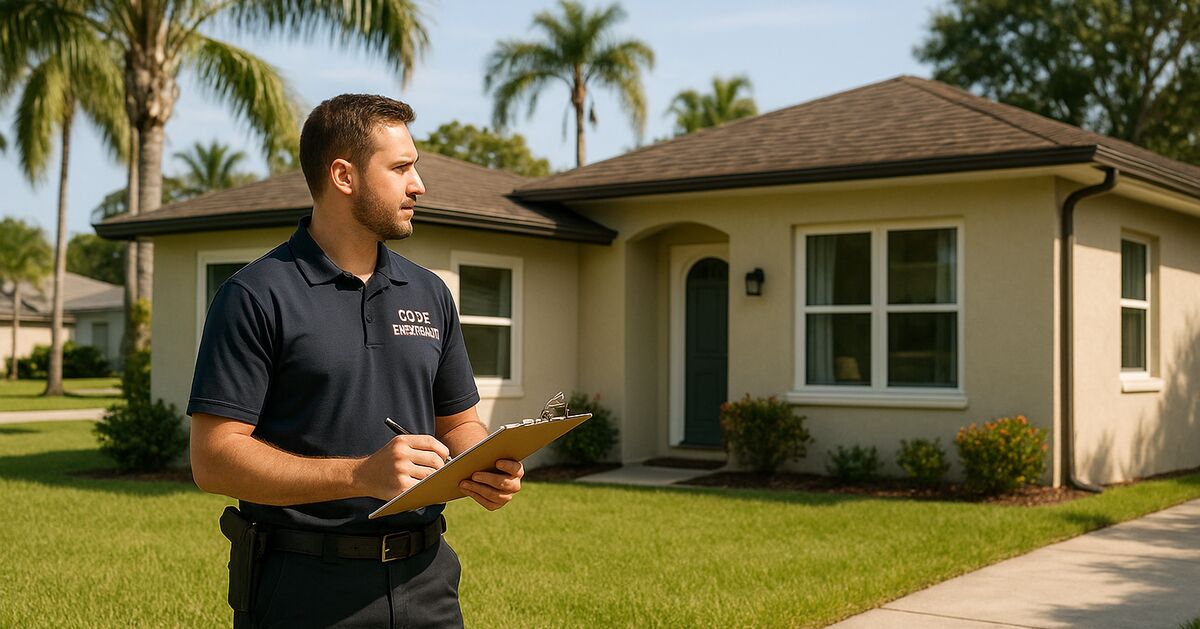
Your neighbor files a complaint. A code officer drives by and notices a new room addition that was not there last year. A real estate transaction triggers a permit search. However it starts, Sarasota County's code enforcement process moves faster than most homeowners expect, and the options that are available to you on day one shrink quickly once a citation is issued.
This post walks through exactly what happens during a code enforcement inspection for unpermitted work, what your exposure looks like at each stage, and, most importantly, how to get ahead of it before the county forces your hand.
How Sarasota County finds out about unpermitted work
Code enforcement cases in Sarasota County are opened in a few common ways:
- Neighbor complaints. These are the most frequent trigger. A fence goes up overnight, a garage gets converted, a shed appears. A neighbor calls the county's code enforcement line or submits a complaint online.
- Drive-by observations. Code officers patrol neighborhoods, especially in communities that have had previous violations. Areas like Gulf Gate, Fruitville, and Bee Ridge, which have older housing stock with lots of do-it-yourself improvement history, tend to see regular sweeps.
- Permit-triggered cross-checks. When you pull a permit for one project, a reviewer may notice something on the property that does not match the record. A pool shows up in an aerial photo but has no permit on file. A second dwelling unit appears on a survey but was never approved.
- Real estate transactions. Buyers, title companies, and their attorneys routinely order permit history searches. If unpermitted work surfaces during closing, the county may be notified or the seller may be compelled to resolve it.
- Utility connections. Requesting a new electrical panel upgrade or a plumbing connection sometimes prompts a site visit that reveals work done without permits.
The county's code enforcement division and the Building and Inspections Department are separate offices, but they share information. A complaint to one can ripple into the other quickly.
What happens on the day of the inspection
When a code officer arrives at your property (sometimes with advance notice, sometimes without, depending on the nature of the complaint), they are looking to document what they can observe from public right-of-way or from your property with your consent. They are not usually entering your home without permission on a first visit.
The officer will note visible improvements, compare them against the county's permit records, photograph the site, and note the date. If something is clearly unpermitted, they will typically issue a Notice of Violation (NOV) rather than a citation on the first contact. This is the county giving you a chance to resolve the problem before formal penalties attach.
The NOV will state:
- The specific code section allegedly violated
- A description of the unpermitted work observed
- A compliance deadline (often 30 to 60 days, though this varies)
- The consequence if you miss the deadline (typically a daily fine and a citation that goes to the Code Enforcement Board or a special magistrate)
Missing that deadline is where homeowners get into serious financial trouble. Daily fines in Sarasota County can reach $250 per day for a standard residential violation and significantly more for repeat violations. Those fines accrue and can become liens on your property.
The difference between a Notice of Violation and a citation
This distinction matters enormously. A Notice of Violation is essentially a warning with a clock attached. You have time to act, no fine has been imposed yet, and most officers will work with you if you demonstrate good faith progress.
A citation is a formal legal finding. It creates a case before the Code Enforcement Board or special magistrate. At that hearing, if you have not resolved the violation, fines are officially set and begin running. That lien can cloud your title, complicate any future sale, and in extreme cases lead to foreclosure by the county to collect unpaid fines.
The practical takeaway: treat an NOV as an emergency, not a bureaucratic formality.
What "resolving" the violation actually means
Here is where many homeowners feel confused. The county is not usually asking you to tear everything down. In most cases, the path to compliance is obtaining a permit after the fact, sometimes called a "permit for existing construction" or an after-the-fact permit. The work has to be inspected and approved to the current code, but demolishing a finished room or removing an addition is rarely required unless the work is fundamentally unsafe or in the wrong location.
The after-the-fact permit process works roughly like this:
- You (or a licensed contractor or permit expediter on your behalf) submit permit application documents describing the existing work.
- Plans review evaluates the work against current building code.
- An inspector visits to examine the actual construction. Depending on how the work was done and how much is accessible, they may require portions of walls to be opened so they can verify framing, electrical, or plumbing behind finishes.
- If the work passes inspection, the permit is issued and then closed with a certificate of completion. The violation is resolved.
- If the work fails inspection, you are given a correction list. You hire the appropriate licensed trades to fix the issues, reschedule, and go again.
The critical word in step three is "accessible." If drywall is in the way of an electrical rough inspection, you may be cutting holes. This is unpleasant but it is not catastrophic. Plan for it mentally and financially.
After-the-fact permits for common project types
Different types of unpermitted work carry different levels of complexity in the after-the-fact process. Here is a rough breakdown:
Simpler to resolve:
- Fences and walls (mostly a zoning and setback review, less construction inspection)
- Water heater replacements
- HVAC changeouts where equipment access is easy
- Minor electrical panel work
Moderately complex:
- Room additions and garage conversions (require structural, electrical, and potentially plumbing review)
- Detached sheds and accessory structures over 100 square feet
- Carport enclosures
More complex or potentially requiring demolition:
- Work in required setbacks (a structure too close to the property line may genuinely need to be moved or removed)
- Unpermitted work in flood zones, which is a significant issue in coastal areas of Siesta Key, Osprey, and Nokomis where FEMA elevation requirements apply
- Additions that have compromised structural elements of the original home
Our permit expediting services team can help you understand which category your situation falls into before you go through the county's process blind.
What happens if you do nothing
Inaction is the worst possible strategy. If you ignore the NOV and the compliance deadline passes:
- A citation is issued and a hearing is scheduled.
- Fines begin running, sometimes retroactively to the date the violation was observed.
- A lien is recorded on your property.
- The lien accrues interest.
- Future permits on the property may be blocked until the violation is cleared.
- When you eventually sell, the title company finds the lien and either the deal dies or you pay the full accumulated amount at closing.
Homeowners in The Meadows and Palmer Ranch who have inherited this situation from a previous owner sometimes find liens from years-old violations that have grown substantially. The county does have a process to reduce or forgive a portion of accumulated fines in cases of true hardship or demonstrated good faith, but it requires a hearing and is not guaranteed.
How to get ahead of it before the county shows up
If you know you have unpermitted work on your property, whether you did it, a previous owner did it, or a contractor did it without pulling permits, the time to act is before any complaint is filed or any officer knocks.
Step 1: Pull your property's permit history. Sarasota County makes this available online through their building permit search tool. You can see every permit that was applied for, issued, and closed (or not closed) on your parcel. If a project you know happened does not appear, that is a red flag. Our frequently asked questions page covers how to read a permit history record if you are not familiar with what to look for.
Step 2: Assess what is actually there. Walk the property with fresh eyes. Note any improvements that post-date the original construction that are not reflected in the permit record. Sheds, additions, converted spaces, new HVAC equipment, replaced roofs, added electrical circuits, new pools or pool equipment, and fences are the most common.
Step 3: Consult before you act. Talking to a permit expediter before you submit anything gives you a picture of what the county is likely to ask for, what inspections are required, and whether there are any showstopper setback or flood zone issues you should know about upfront. This is far better than submitting documents that trigger a review before you have had time to prepare.
Step 4: Submit proactively. Submitting an after-the-fact permit application before any code enforcement contact puts you in a meaningfully better position. The county's posture shifts from "enforcement" to "compliance assistance" when you come to them first. Officers and reviewers have real discretion in how aggressively they pursue cases, and demonstrated good faith counts.
If you are in Sarasota, Siesta Key, Palmer Ranch, or anywhere else in the county, our team can help you identify what you have, prepare the documentation, and manage the submission so you are not doing this alone. See all the areas we serve for a complete list.
What contractors and trades need to be involved
After-the-fact permits almost always require licensed contractors for any electrical, plumbing, or mechanical work that needs to be corrected or documented. Even if the original work was done by the homeowner or an unlicensed handyman, the person signing off on the corrective work for permit purposes must be licensed in Florida.
This is a practical consideration for your budget. You may need:
- A licensed electrician to inspect and certify (or correct) the electrical work
- A licensed plumber for any plumbing elements
- A structural engineer or licensed contractor for additions involving structural framing
- A licensed HVAC contractor for mechanical work
Getting these professionals lined up before you submit your permit application speeds the process considerably. When reviewers ask for a letter of compliance or a field inspection from a licensed contractor, you want to have that relationship already in place.
A note on flood zones and coastal properties
Properties in Osprey, Nokomis, and along the Siesta Key waterfront carry an added layer of complexity. If the unpermitted work involved adding enclosed square footage, altering the lowest floor elevation, or modifying a structure in a Special Flood Hazard Area, FEMA's regulations under the National Flood Insurance Program may apply. Substantial improvement rules mean that if the value of the unpermitted work exceeds 50% of the structure's pre-improvement market value, the entire structure may need to be brought into compliance with current flood elevation requirements. That is a significant potential cost and is worth understanding before you begin the permit process.
Our post on permitting a dock, seawall, or boat lift in Sarasota County covers some of the coastal regulatory framework that also touches on unpermitted waterfront structures.
The role of a permit expediter in code enforcement situations
Navigating an active code enforcement case while simultaneously preparing permit documents is stressful. The county has multiple departments involved, deadlines are real, and the documentation requirements for after-the-fact permits can be more extensive than for standard new work (because you are essentially proving something was done correctly after the fact rather than having it inspected as it was built).
A permit expediter who knows Sarasota County's process can:
- Communicate directly with code enforcement on your behalf to document that you are actively pursuing compliance
- Prepare and submit the permit application with the documentation reviewers expect to see
- Coordinate with your contractors to align their inspection scheduling with county timelines
- Track the application through review and respond to correction comments quickly so you are not losing days waiting for a response
The goal is to close the NOV before it becomes a citation and to close the permit before your deadline. Both are achievable in the majority of cases when you start promptly. You can reach out to us directly to talk through your specific situation without any obligation.
Summary: the action steps that matter most
If you have received a Notice of Violation, or if you suspect you have unpermitted work on your property before anyone has said a word:
- Pull your permit history now
- Identify every improvement that lacks a closed permit
- Talk to a permit professional before you contact the county or submit documents yourself
- Submit proactively if you can, because it genuinely changes how the county treats you
- Get licensed contractors lined up for any trades work that needs to be inspected or corrected
- Do not miss the NOV compliance deadline under any circumstances
Unpermitted work is remarkably common in Sarasota County's older neighborhoods. It is not a disaster. The county's process exists specifically to bring work into compliance, not to punish homeowners who inherited problems or made a genuine mistake. The path through it is straightforward when you take it seriously from the start.
For more background on what the permitting process looks like from the beginning, visit our home page or browse the full blog for guides covering specific project types.
Start here
Tell us about your permit
A real local person reads every request and replies with a clear next step, usually the same business day. No cost, no obligation.