Siesta Key flood zone permits: how FEMA elevation rules change what Sarasota County demands
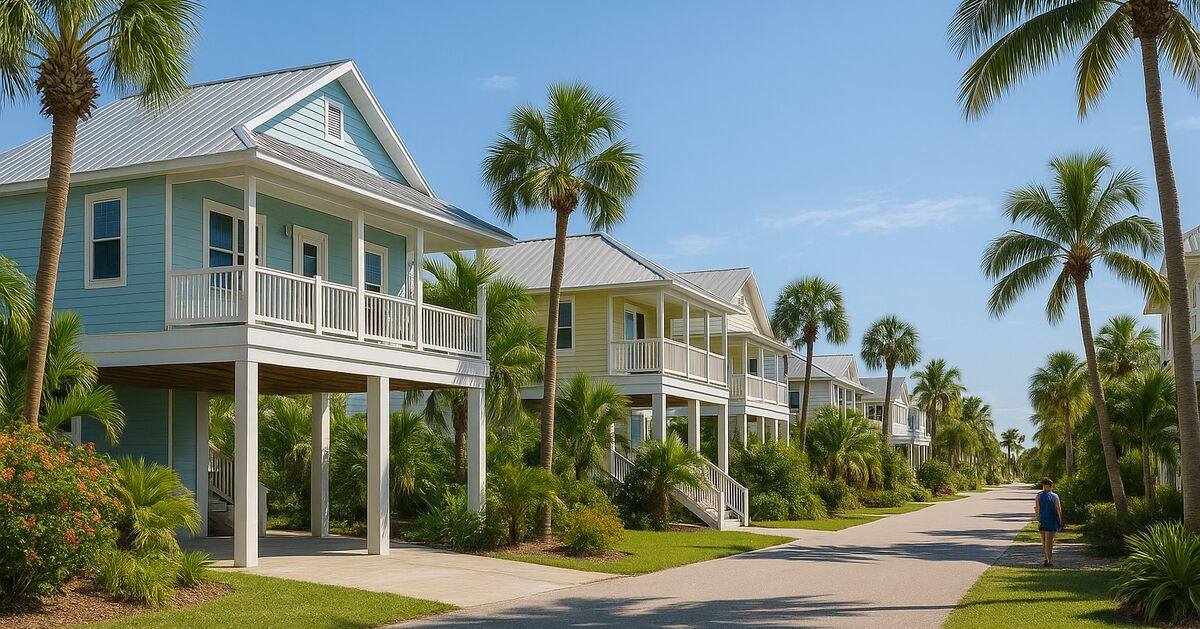
Siesta Key is one of the most desirable addresses in Florida, and it sits almost entirely inside a FEMA Special Flood Hazard Area. That fact alone changes every permit you will ever pull for a property there, sometimes dramatically. Understanding why helps you plan smarter, budget accurately, and avoid the kind of surprises that stall projects for months.
Why flood zones matter to the permit office
When Sarasota County reviews a building permit application, one of the very first things staff checks is the subject parcel's flood zone designation. Most of Siesta Key falls inside Zone AE or Zone VE, the two highest-risk categories on FEMA's Flood Insurance Rate Maps (FIRMs). Zone AE covers inland and bay-side areas with a predictable base flood elevation (BFE). Zone VE, which stands for coastal high-hazard area, applies to the Gulf-front parcels most exposed to wave action and storm surge.
These designations are not just labels. They are triggers. Once a property is mapped into one of these zones, Sarasota County must enforce the National Flood Insurance Program (NFIP) standards as a condition of the county's participation in that program. Lose that participation and property owners lose access to federally backed flood insurance. That is why the county is not being arbitrary when it demands elevation certificates and engineered drawings; it is legally required to do so.
The 50 percent rule and substantial improvement
The most consequential concept for renovation projects is what the NFIP calls "substantial improvement." Sarasota County defines it the same way: if the cost of improvement to an existing structure equals or exceeds 50 percent of the structure's pre-improvement market value, the entire structure must be brought into compliance with current flood zone standards, not just the portion being renovated.
Here is what that looks like in practice. Say you own a 1970s beach cottage on Siesta Key with an assessed improvement value of $280,000. You plan a kitchen gut and master bath addition that carries a contractor bid of $155,000. That project clears the 50 percent threshold. Suddenly you are not just permitting a remodel; you are committing to raising the entire structure to the current base flood elevation plus any local freeboard requirement, which in Sarasota County is typically one additional foot above BFE in AE zones. The foundation work alone can dwarf the original renovation budget.
This is not a loophole or a gray area. The county tracks cumulative improvement costs over a rolling period, so splitting a large project into smaller phases to dodge the threshold is a compliance violation, not a strategy. If you are curious how remodeling permits interact with these thresholds more generally, [permitting a kitchen or bathroom remodel in Sarasota County]((/blog/permitting-a-kitchen-or-bathroom-remodel-in-sarasota-county-what-s-really)) covers the base permit requirements you still have to meet regardless of flood zone status.
What an elevation certificate actually is and why you need one
An elevation certificate (EC) is a standardized FEMA form completed by a licensed Florida surveyor or engineer. It documents the lowest floor elevation of the structure, the grade around the foundation, any enclosures below the BFE, and the flood zone itself. For a permit on Siesta Key, the county will require one at two points in many projects.
First, a pre-construction EC may be required to establish a baseline, especially when a project triggers the substantial improvement review. Second, a post-construction EC must be submitted before the county will issue a Certificate of Occupancy or Certificate of Completion. Inspectors cannot close out the permit without confirming the finished structure meets the elevation that was approved on the plans.
If you have recently purchased a Siesta Key property and have not seen an EC, it may exist in the permit records or it may not exist at all for older structures. Knowing what is already documented about a property is worth investigating before you plan any work. The county's permit history system can tell you a lot, and our post on how to read a Sarasota County permit history report walks you through what those records reveal and what red flags to watch for.
Zone VE: the extra layer for Gulf-front properties
If your Siesta Key property fronts the Gulf or is mapped into Zone VE, the requirements go beyond elevation. Zone VE structures must be elevated on open foundations such as piles or columns that allow wave action to pass beneath. The county will not approve a VE-zone structure built on a filled or solid foundation. This means:
- No enclosed space below the BFE can be used for anything other than parking, building access, or limited storage, and even that storage must be designed with breakaway walls that fail at specific load values before they can damage the main structure.
- Breakaway wall design must be documented in the engineering drawings submitted with the permit application.
- Fill cannot be used under the building as a substitute for elevation in Zone VE. You can fill a yard for drainage purposes, but the foundation design must still meet the open-pile standard.
- A coastal construction setback line (CCSL) permit from Florida DEP may be required in addition to the Sarasota County building permit, depending on proximity to the mean high-water line.
Getting both permits moving in parallel is usually smarter than sequential filing. Our permit expediting services are designed specifically to manage that kind of multi-track coordination so things do not grind to a halt waiting on one agency while the other is ready to move.
The freeboard requirement and what it adds to construction costs
Sarasota County adopted a local freeboard standard of one foot above the FEMA base flood elevation in AE zones. That extra foot is not required by FEMA but it is required by the county, and it matters for two reasons.
First, it affects what you can build. If BFE is 10 feet NAVD88 and the county requires plus-one foot, your lowest floor must be at or above 11 feet. In a dense neighborhood where lot coverage limits already constrain your footprint, that extra foot of elevation height can push you into additional structural engineering to keep the building visually proportionate or to meet height limits measured from grade.
Second, it directly reduces your flood insurance premium. FEMA's rating system rewards elevation above BFE. A structure sitting one foot above BFE pays significantly less in annual premiums than one sitting right at BFE, and two feet above typically costs less still. Sarasota County's freeboard requirement is, in a real sense, quietly saving property owners money over time even if the upfront construction cost is higher.
Documents Sarasota County will ask for on a flood zone permit
Beyond the standard building permit package, expect the county to require some combination of the following for any Siesta Key project that involves structural work, additions, or anything approaching the substantial improvement threshold:
- A current elevation certificate prepared by a Florida-licensed surveyor
- Architectural or structural drawings stamped by a Florida-licensed PE or architect, showing lowest floor elevation, foundation type, and finished floor elevation
- A substantial improvement worksheet, which is a county form comparing project cost to pre-improvement market value
- Breakaway wall calculations (Zone VE)
- A finished construction elevation certificate before CO or CC is issued
- Documentation of any crawl space or enclosure area below BFE and its intended use
- Flood openings design documentation if there is any enclosed area below BFE in Zone AE
Not every project needs all of these. A simple roof permit, for example, typically does not trigger the full flood zone review unless it is part of a larger scope that crosses the substantial improvement threshold. But the moment structural work, additions, or interior renovations are involved, the flood zone checklist becomes part of the review.
Understanding whether your project will end with a Certificate of Occupancy or a Certificate of Completion also matters here. The CO vs. CC distinction in Sarasota County affects what the post-construction elevation certificate needs to document and when it has to be submitted.
Common mistakes Siesta Key homeowners make
Underestimating project cost on permit applications. Some applicants try to keep the declared cost low to stay below the substantial improvement threshold. The county uses its own valuation methodology if the submitted cost looks inconsistent with the scope of work. A flagrant understatement can result in the permit being voided and the homeowner facing code enforcement.
Assuming an old elevation certificate is still valid. FEMA updates its Flood Insurance Rate Maps, and Sarasota County has seen remapping cycles that changed BFE values in several neighborhoods. An EC from 2005 may show a BFE that no longer applies to your property. Always have a surveyor confirm the current effective FIRM panel before relying on old documentation.
Ignoring cumulative improvements. If you did a bathroom remodel last year and now want to add a room, the county can look back at prior permitted work and add those costs together for the substantial improvement calculation. Keeping good records of what you have spent and what the county has already logged is important.
Starting work before the permit is approved. On a Siesta Key property in a high-risk flood zone, starting construction without an approved permit is particularly risky. If code enforcement gets involved, the county can require the work to be halted, exposed, or even removed to verify compliance. The path from a stop-work order back to a clean project is slow and expensive. For what that process looks like, our post on unpermitted work found by Sarasota County explains the steps in detail.
How the permit review process works for flood zone projects
Siesta Key permits that involve flood zone compliance go through Sarasota County's building department and may require concurrent review by the zoning division as well. Flood zone compliance is typically checked by the plans examiner during the technical review phase. If the plans do not include the required elevation data or the engineering is incomplete, the application will be kicked back with comments that have to be addressed before review can continue.
For projects that also require a DEP coastal construction permit or a SFWMD environmental resource permit, the county generally wants to see that those applications are in progress before it will finalize its own approval. This is where coordination matters. Having one point of contact managing all the moving pieces across agencies tends to move things faster than a homeowner trying to chase four different offices at once.
If you are on Siesta Key and want to understand the full scope of what a project will require before you commit to a design, our Siesta Key permit expediting page outlines how we work with property owners from the planning stage through final inspection.
What about properties in Osprey and Nokomis?
Flood zone requirements are not unique to Siesta Key. Waterfront and near-water properties in Osprey and Nokomis face the same FEMA zone designations and the same Sarasota County enforcement standards. The BFE values differ by location, and some areas along Osprey's bay front sit in Zone AE with base flood elevations that surprise owners who assumed their inland position meant lower risk. If you are working with a property outside the Key itself, our Osprey permit expediting service covers those projects with the same approach.
Practical advice before you start planning
Before you hire an architect or get a contractor bid on any Siesta Key project, do three things:
- Pull the current FIRM panel for your parcel using FEMA's Flood Map Service Center and confirm the zone and BFE. Your surveyor can do this for you as part of an EC.
- Ask the county's building department for any prior substantial improvement documentation on the property. You want to know if the 50 percent threshold has already been partially consumed.
- Get a realistic project cost estimate that includes the elevation work if it is required. Surprises discovered after permit submission are far more expensive than planning for them upfront.
The permit office staff at Sarasota County is generally willing to answer pre-application questions, and the investment of a phone call or a pre-application meeting can save weeks of review time.
For a broader look at how we help homeowners across Sarasota navigate projects from start to finish, visit our services page or get in touch to talk through what your specific project will require. You can also browse the full blog for more county-specific guidance, or check the FAQ for quick answers to the questions we hear most often.
Siesta Key's flood zone rules are not meant to be punitive. They exist because the science of storm surge is unambiguous, and the cost of a flood-damaged home that was built below grade is borne not just by the owner but by the entire insurance system. Understanding the rules, planning for them early, and working with people who know how Sarasota County applies them is the straightest path from permit application to finished project.
Start here
Tell us about your permit
A real local person reads every request and replies with a clear next step, usually the same business day. No cost, no obligation.