When a contractor's lost license voids your permit
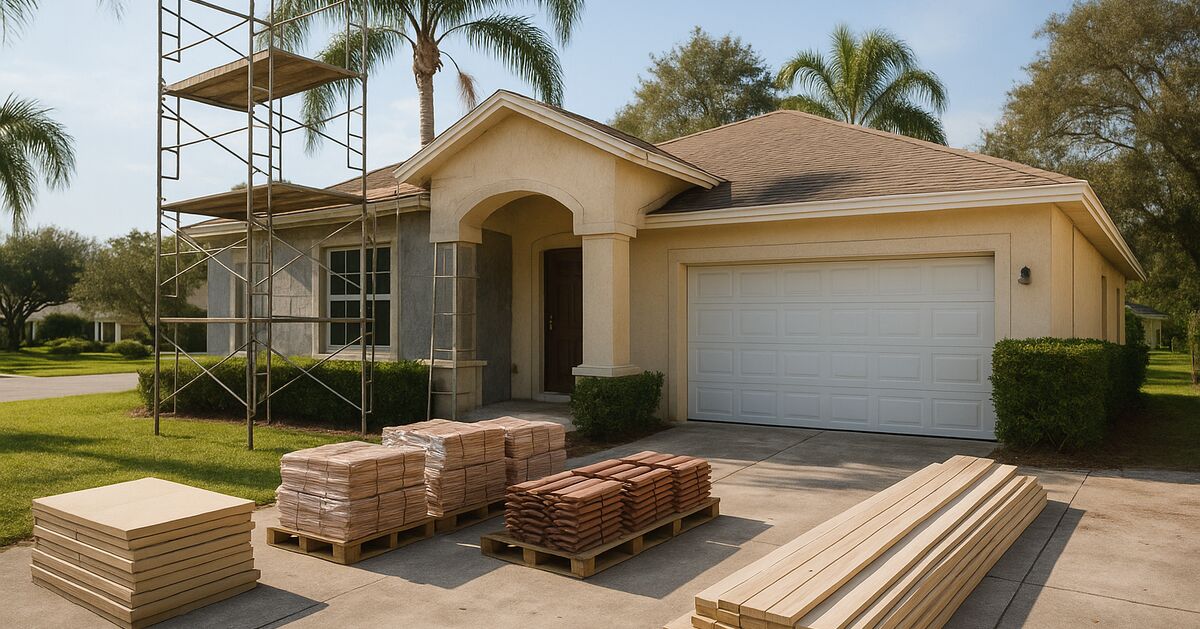
Your renovation is halfway done, and then you find out the contractor who pulled the permit no longer holds a valid license. It is a situation that comes up more often than homeowners expect, and the fallout is often more complicated than a simple phone call can solve.
This post walks through exactly what happens to a Sarasota County building permit when the licensed contractor of record loses their license, what county rules require you to do next, and how to protect yourself whether you are a current homeowner, a buyer doing due diligence, or a property investor reviewing permit history.
Why the contractor's license matters so much to the permit
In Florida, a building permit is not just a piece of paper the county files away. It is a legal instrument tied to the licensed contractor who signed the application. Under Florida Statute 489, only a licensed contractor (or a qualified owner-builder) may pull a permit for work that requires one. The contractor's license number, qualifier name, and insurance certificate are woven into the permit record from the moment of application.
When Sarasota County issues a permit, it is, in a real sense, making an agreement with that contractor: "We are relying on your license, your bond, and your professional accountability to see this work through correctly." The county's building department uses that license status as a baseline assurance that the work will meet the Florida Building Code and that someone with legal standing is responsible for it.
If the contractor's license lapses, is suspended, or is revoked after the permit is issued, that baseline assurance disappears. The permit does not automatically vanish, but it becomes legally problematic at nearly every subsequent step.
Three ways a contractor can lose their license
Understanding how this happens helps you recognize the warning signs early:
- Failure to renew. Florida contractor licenses must be renewed biennially. A contractor who misses the renewal window falls into inactive or null-and-void status. This is the scenario that happens most quietly, often because the contractor went out of business or retired.
- Disciplinary action by the Florida Department of Business and Professional Regulation (DBPR). Complaints from homeowners, code violations, financial fraud, or insurance lapses can trigger a DBPR investigation that ends in suspension or revocation.
- Bankruptcy or business dissolution. A company dissolving does not automatically revoke the qualifier's personal license, but it can trigger insurance cancellations that cause the county to flag the permit.
You can verify a contractor's current license status at any time through the DBPR's online license verification portal. For permits already in the county system, Sarasota County's Accela citizen portal shows the contractor of record on each permit record.
What Sarasota County building department can and cannot do once the license is gone
The county cannot simply "keep going" on a permit that is now in legal limbo. Here is what actually happens in practice:
Inspections may be refused. If the county becomes aware that the contractor of record no longer holds a valid license, it can refuse to schedule or conduct inspections under that permit. An inspector who shows up and discovers the license issue on-site has the authority to halt the inspection and flag the permit record.
The permit can be placed on hold. Sarasota County building staff can place an administrative hold on a permit, stopping the clock and preventing any further inspection approvals until the licensing issue is resolved.
The final certificate is blocked. A Certificate of Occupancy (CO) or Certificate of Completion (CC) cannot be issued on a permit held by an unlicensed or delicensed contractor. If you are counting on that certificate to close a sale, move in, or satisfy a lender, this is a serious problem. For a refresher on what those certificates mean and why they matter, see our post on CO vs. CC in Sarasota County: which certificate your project needs and why it matters.
The county does not "fix" it for you. Sarasota County building department is not an advocate in this situation. Its job is code compliance, not contractor management. The resolution is the homeowner's responsibility.
Your options as the property owner
When you are facing a permit tied to a contractor who no longer holds a valid license, you have a few realistic paths forward. Which one applies depends on how far along the work is, whether the contractor is still reachable, and whether the work itself was done correctly.
Option 1: The original contractor reinstates their license
If the license lapsed due to a simple renewal failure, the contractor can potentially reinstate it with the DBPR. If they do, and the reinstatement is reflected in the county's records, the permit can often proceed under the original contractor of record. This is the cleanest path, but it requires a cooperative, still-operating contractor. If the contractor has dissolved their business or is facing disciplinary action, reinstatement may be impossible.
Option 2: A new licensed contractor takes over as contractor of record
A licensed contractor can file a change of contractor of record with Sarasota County. This requires the new contractor to review the existing work, agree to accept responsibility for its code compliance going forward, and submit the required documentation to the building department.
This is not a formality. A competent contractor taking over another's work will want to inspect what has been done, and they may identify work that does not meet code, which could require corrections before they will sign on. From the county's perspective, the new contractor is staking their license on the work that has already been done as well as what remains, so they have every incentive to be thorough.
For projects in areas like Palmer Ranch or The Meadows where HOA rules layer on top of county code requirements, the new contractor will need to understand both sets of obligations before agreeing to step in.
Option 3: Owner-builder conversion (with significant caveats)
In some cases, a homeowner can convert the permit to an owner-builder permit. Florida law allows this but attaches substantial responsibilities and restrictions to it. Owner-builders take on personal legal liability for the work, cannot use the owner-builder exemption for the same property for a set period, and may face complications when selling the property later. This path is worth understanding fully before pursuing it.
Option 4: Permit remediation for completed but uninspected work
If the work is already finished but never received final inspections because the contractor disappeared with a lapsed license, you may need to go through a process similar to permitting unpermitted work. This can involve opening a new permit, having inspectors assess existing conditions, and potentially exposing or correcting work that is now inside walls or underground. Our broader network of local resources and our permit expediting services can help you map out which path makes sense for your specific situation.
What this looks like in a real Sarasota County context
Consider a homeowner in Gulf Gate who hired a small remodeling company to renovate their kitchen. The contractor pulled the permit, work began, and rough-in inspections were passed. Then the contractor's qualifier let their DBPR license expire and stopped returning calls. The permit sits open, no final inspection has been scheduled, and the homeowner now wants to sell the house.
The title search surfaces the open permit. The buyer's lender requires resolution before closing. The homeowner contacts Sarasota County building department and learns the permit is flagged because the contractor's license is no longer valid. The county will not schedule a final inspection.
The homeowner's path forward: find a licensed contractor willing to take over as contractor of record, have that contractor review the completed work, submit the change of contractor paperwork to the county, schedule the final inspection, and obtain the certificate. If any corrections are needed, those happen first.
This process takes time, costs money, and often surprises homeowners who assumed an "almost done" permit was practically closed. If you are buying property and see an open permit on a property with contractor of record details worth checking, the post on how to read a Sarasota County permit history report explains how to pull and interpret those records yourself.
Why this problem shows up at property sales so often
A permit tied to a lapsed-license contractor can sit dormant for years. The work looks fine, the homeowner has lived with it comfortably, and nothing has gone wrong. But when the property goes to sale, title agents and real estate attorneys look at the permit history. An open permit with a contractor of record who no longer holds a license is a red flag that can delay or kill a closing.
Buyers doing due diligence in areas like Osprey, Nokomis, Bee Ridge, or Fruitville should include permit status checks as part of any offer process, not just an afterthought during inspection. Investors, in particular, should treat this research as essential, as explored in our post on permit research before buying a Sarasota County investment property.
What if the work was done badly, not just administratively incomplete?
This is where things become genuinely serious. A contractor who lost their license due to disciplinary action may have lost it for reasons directly related to the quality of their work. If that contractor did work on your property, you may be facing not just a paperwork problem but a code compliance problem or even a safety problem.
Sarasota County building inspectors are not required to sign off on work that does not meet the Florida Building Code, regardless of who pulled the permit or when. If a new contractor of record discovers deficiencies, or if an inspector finds them during the final inspection, corrections are required before any certificate is issued.
If the deficiencies are significant and the original contractor cannot be held accountable (because they are unlicensed, dissolved, or unreachable), your recourse may run through the DBPR's recovery fund for consumer claims against licensed contractors, or through civil litigation. The DBPR's Unlicensed Activity division is also a resource if you believe work was performed after the license lapsed, which would constitute unlicensed contracting under Florida law.
Preventing this situation before it starts
The simplest protection is verifying a contractor's license status before work begins and at each major milestone. You can do this for free through the DBPR portal. When you are working with our permit expediting team, we monitor permit status and contractor registration as part of the process, which helps catch issues before they become full-blown problems.
It also helps to understand what Sarasota County requires of contractors before they can pull a permit in the first place, including bonds, insurance, and registration with the county, alongside their state license.
For homeowners in Sarasota or Siesta Key navigating a complex permit situation, the FAQ page has answers to many common questions, and our team is reachable through the contact page if your situation needs a closer look.
A note on timing and permit expiration
An open permit with a lapsed-license contractor is also at risk of permit expiration. Florida Building Code generally allows permits to expire without an approved inspection for an extended period (commonly around 180 days), so check your specific permit's expiration terms with the county. If the permit has been sitting inactive while you sorted out the contractor situation, check the permit's expiration date immediately. An expired permit requires a renewal application, and in some cases, Sarasota County may require a new permit altogether if the expiration is significant.
Acting quickly once you discover the licensing issue is not just good practice. It protects you from having the permit itself expire on top of the licensing problem, which would double the complexity of resolution.
The bottom line
A Sarasota County permit issued to a contractor who has since lost their license does not disappear on its own, and it does not quietly become valid again. It sits in the permit record as an open, flagged item that blocks final inspections, blocks certificates, and surfaces at the worst possible time in a sale. The resolution typically requires either reinstating the original contractor's license or bringing a new licensed contractor of record onto the permit, and it requires proactive communication with Sarasota County building department.
If you are dealing with this situation now, or want to audit your property's permit history before it becomes someone else's problem to discover, our services page explains how we help homeowners and investors work through exactly these kinds of permit complications, and our locations page shows the full list of communities we serve across the county.
Sources & further reading
- Florida Statute 489 - Contracting (Florida Legislature)
- DBPR License Verification Portal (Florida Department of Business and Professional Regulation)
- DBPR Unlicensed Activity Division (Florida Department of Business and Professional Regulation)
- DBPR Construction Industries Recovery Fund (Florida Department of Business and Professional Regulation)
Claim-by-claim audit (7 checked)
- “Under Florida Statute 489, only a licensed contractor (or a qualified owner-builder) may pull a permit for work that requires one.” (cited → flsenate.gov)
- “Florida contractor licenses must be renewed biennially.” (cited → flsenate.gov)
- “A Certificate of Occupancy (CO) or Certificate of Completion (CC) cannot be issued on a permit held by an unlicensed or delicensed contractor.” (reasoning shown in the article)
- “Florida Building Code generally allows permits to expire without an approved inspection for an extended period (commonly around 180 days), so check your specific permit's expiratio…” (rewritten to what the article can stand behind)
- “Owner-builders take on personal legal liability for the work, cannot use the owner-builder exemption for the same property for a set period, and may face complications when selling…” (reasoning shown in the article)
- “your recourse may run through the DBPR's recovery fund for consumer claims against licensed contractors, or through civil litigation” (cited → myfloridalicense.com)
- “The DBPR's Unlicensed Activity division is also a resource if you believe work was performed after the license lapsed, which would constitute unlicensed contracting under Florida l…” (cited → myfloridalicense.com)
Start here
Tell us about your permit
A real local person reads every request and replies with a clear next step, usually the same business day. No cost, no obligation.