How to permit a generator in Sarasota County: electrical, mechanical, and fuel explained
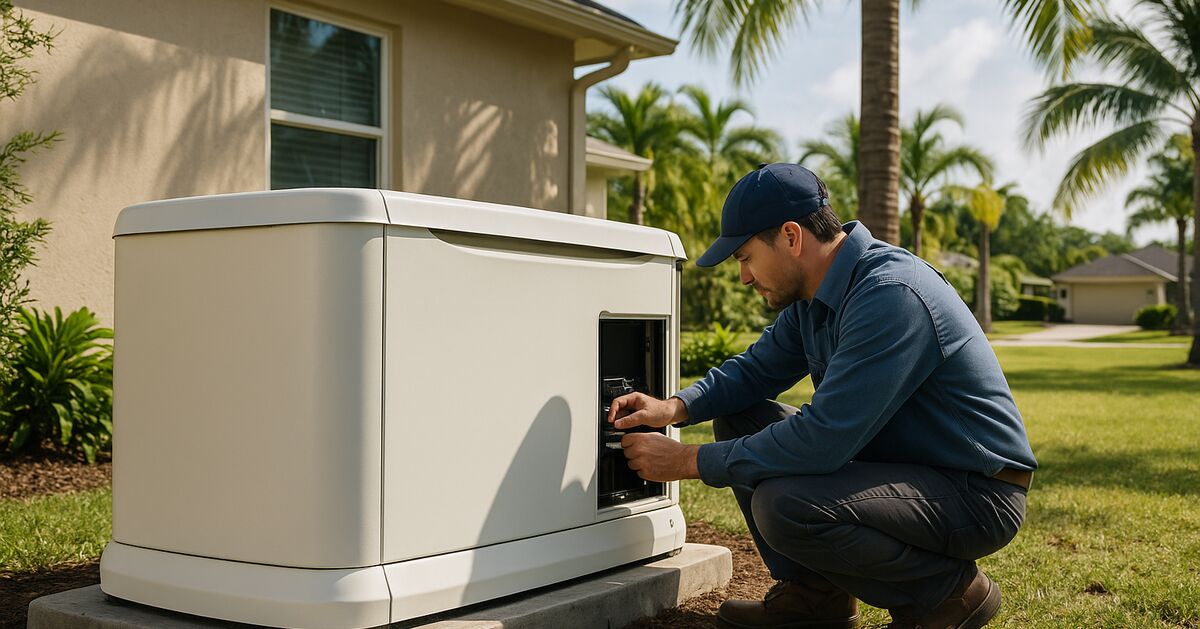
Hurricane season has a way of turning a generator from a luxury into a necessity almost overnight. If you live in Sarasota, Siesta Key, Osprey, or anywhere else along the Gulf Coast, you already know that a well-timed storm can knock out power for days. A permanently installed standby generator solves that problem, but it also triggers a permitting process that surprises a lot of homeowners. Understanding what is required before the work starts will save you time, money, and the headache of a failed inspection.
Why a standby generator needs a permit at all
A portable generator you wheel out of the garage and plug a few extension cords into is generally not a permit issue. A permanently installed standby generator, the kind that sits on a concrete pad outside your house, connects to your natural gas or propane supply, and automatically starts the moment utility power fails, is a different animal entirely.
It touches three separate regulated systems: your electrical service, your fuel supply, and the mechanical equipment itself. Sarasota County's Building Department requires permits for each of those systems because the risks of getting them wrong are serious. Backfeed from an improperly installed transfer switch can electrocute a utility lineworker. A gas line installed without inspection can leak undetected. A generator placed too close to a window or door can introduce carbon monoxide into your home. Permits exist to make sure a licensed professional does the work and a qualified inspector verifies it.
You can learn more about the overall framework for what triggers a permit on our frequently asked questions page, but for generators specifically, the short answer is: if it connects to your house permanently, you need a permit.
The three permit tracks for a standby generator
Most standby generator installations involve at least two, and often all three, of the following permit types.
Electrical permit. This is almost always required. The core of any generator installation is the automatic transfer switch (ATS), which disconnects your home from the utility grid and connects it to the generator the moment power fails. That switch has to be wired correctly or the consequences range from equipment damage to a fatal shock for a lineworker restoring power on the street. Sarasota County requires a licensed electrical contractor to pull the electrical permit. The permit covers the ATS, the wiring from the generator to the switch, any subpanel work, and the load calculation that proves your generator is properly sized for the circuits it will serve.
Mechanical permit. The generator unit itself, as a piece of mechanical equipment, typically requires its own mechanical permit covering the installation of the unit, the exhaust system, and the concrete pad or other mounting surface. This permit also addresses setback requirements, which we will cover in detail below.
Gas permit (fuel system permit). If your generator runs on natural gas or propane, the piping that feeds it must be permitted separately. This includes any new gas line run from your meter or tank, the regulator sized for the generator's BTU demand, and the shutoff valve at the unit. A licensed gas contractor or a plumbing contractor with a gas endorsement must pull this permit in Sarasota County. If you are using a propane tank, the tank placement itself may also need to meet fire-code setbacks.
Our permit expediting services can help coordinate all three permit applications so nothing falls through the cracks between trades.
Electrical requirements in detail
The National Electrical Code (NEC), which Florida adopts with state amendments, governs the electrical side of a generator installation. Here are the specific items Sarasota County plan reviewers and inspectors will focus on.
Transfer switch type and placement. You have two main choices: a whole-house transfer switch that transfers your entire panel, or a manual or automatic transfer switch that covers selected circuits. Either way, the switch must be listed and labeled for the application, installed in an accessible location, and clearly marked. An interlock kit installed at the main panel is an alternative to a separate ATS for some smaller setups, but not all installations qualify.
Load calculation. Your electrical contractor must submit a load calculation showing that the generator's rated output is sufficient for the circuits connected to it. This protects both the equipment and your home. An undersized generator that trips under load is not just an inconvenience; it can damage sensitive electronics.
Wiring methods. Exterior wiring between the generator and the transfer switch must be in an approved weatherproof conduit or use a listed cable assembly rated for outdoor use. Florida's wind-load and wet-location requirements make this especially important in coastal communities like Siesta Key and Osprey, where salt air and storm conditions accelerate corrosion.
Grounding. The generator must be properly grounded. If the transfer switch transfers the neutral conductor (a "switched neutral" setup), the generator's frame grounding is handled differently than in a "solid neutral" setup. Getting this wrong creates hazardous conditions and is a common reason for electrical inspection failures.
GFCI and AFCI requirements. Depending on which circuits are connected and how the subpanel is configured, GFCI and AFCI protection requirements may apply. Your electrician should address these in the permit drawings.
Mechanical and placement requirements
Sarasota County follows the Florida Building Code, which in turn references manufacturer installation instructions and NFPA standards for generator placement. A few key rules:
Setbacks from openings. A standby generator must be placed a minimum distance from windows, doors, soffit vents, and other openings that could allow exhaust gases into the living space. The exact distance depends on the generator's exhaust direction and BTU output, but five feet is a common minimum, and larger units often require more. This is not a rule to fudge: carbon monoxide poisoning from a generator placed too close to an opening is a documented cause of fatalities in Florida after hurricanes.
Setbacks from property lines and structures. Sarasota County's zoning regulations specify how close accessory equipment can be placed to your property line. In most residential zones this is five feet from the rear and side property lines, but you should verify the specific setback for your zoning district. Homes in communities like Palmer Ranch or The Meadows that are governed by an HOA may have additional siting restrictions on top of county minimums.
The concrete pad. The generator must be mounted on a concrete pad (or an approved composite pad) that is sized per the manufacturer's specifications and secured against flotation and movement. In flood zones, which cover significant portions of Sarasota and the barrier islands, the pad elevation and anchoring requirements become more stringent. Your mechanical permit drawings must show pad dimensions, thickness, and reinforcement.
Noise ordinance. This is not strictly a building code issue, but it is worth knowing. Sarasota County's noise ordinance limits sound levels in residential zones. Most modern standby generators from major manufacturers operate in the 60 to 70 dBA range at 23 feet, which is generally compliant, but placement and enclosures matter. Some neighborhoods, particularly in Gulf Gate and Bee Ridge where lots tend to be smaller, may benefit from an enclosure or strategic placement to keep the neighbor relationship intact.
Fuel system requirements in detail
Natural gas. If your home is already on SunGas or another natural gas service, the gas company will need to verify that your existing service has adequate capacity for the generator's BTU demand, in addition to your other gas appliances. The contractor will run a new dedicated gas line from your meter to the generator, sized with enough capacity to avoid pressure drop during startup (when demand spikes). All joints in the new line must be tested for leaks before the system is approved.
Propane. Many homes in Fruitville, Nokomis, and other areas without natural gas service use propane. A propane-powered generator requires a dedicated tank (or an appropriately sized existing tank) and a regulator matched to the generator's requirements. The tank must be placed at the distances specified by NFPA 58 (the Liquefied Petroleum Gas Code), which vary based on tank size. A 100-gallon tank has different setback rules than a 500-gallon tank. The fill connection must also be accessible to the delivery truck without the driver having to navigate across your yard in the dark.
Fuel line materials. Black iron pipe is the traditional choice for gas lines and remains common. CSST (corrugated stainless steel tubing) is also permitted but requires bonding per the Florida Building Code to reduce the risk of arc damage during a lightning strike, which is a serious concern in Southwest Florida.
For projects involving fuel systems alongside other complex trade coordination, it helps to have someone who knows the local process well. Our Sarasota County permit expediting services are designed exactly for these multi-permit situations.
What the permit application package needs to include
When your contractor submits the permit application, Sarasota County's plan reviewers expect to see a complete package. Missing documents are the number one reason applications get kicked back and add weeks to a project timeline.
A typical generator permit package includes:
- A site plan showing the property, the proposed generator location, distances to property lines, structures, and openings
- Foundation/pad details (dimensions, concrete spec, anchoring method)
- The generator manufacturer's installation manual or cut sheet
- A single-line electrical diagram showing the utility service, transfer switch, generator, and any subpanel
- A load calculation
- Gas line routing diagram and pipe sizing calculation (for fuel permit)
- Contractor license numbers and insurance information for each trade
If you are in a flood zone (and many properties near Phillippi Creek, Roberts Bay, or the barrier islands are), you may also need to show the pad elevation relative to Base Flood Elevation (BFE).
What inspectors check during and after installation
Sarasota County typically requires multiple inspections for a generator installation because there are multiple trades involved. Expect at minimum:
- A rough electrical inspection before walls or conduit are closed up
- A gas line pressure test inspection before the line is backfilled or concealed
- A mechanical rough inspection covering pad, unit placement, and exhaust routing
- Final inspections for each permit, during which the inspector will verify completed installation, labeling, and may require the generator to be started and observed
Inspectors pay particular attention to transfer switch labeling, grounding conductor sizing, gas line support intervals, and the exhaust discharge direction. Having your contractor present for final inspections is strongly recommended so any minor issues can be addressed on the spot rather than requiring a re-inspection visit.
Common mistakes that delay generator permits
After working with homeowners across Sarasota County, these are the issues that come up most often:
- Ordering the generator before confirming the placement. Once you see where it actually fits relative to setbacks and openings, you may find your first choice of location does not work.
- Only pulling one permit. Some homeowners (and even some contractors) assume the electrical permit covers everything. It does not. Each trade requires its own permit.
- Skipping the gas capacity check. Adding a 22-kilowatt generator to an existing gas service without verifying capacity can result in pressure drop that causes your other appliances, including your furnace and water heater, to malfunction.
- HOA approval after the fact. If you live in a community in Palmer Ranch or The Meadows with an active HOA, get their written approval of the generator location and screening requirements before you pull the permit. County approval and HOA approval are independent processes.
- Flood zone issues discovered late. If your property is in a Special Flood Hazard Area, additional requirements may apply. Check your flood zone designation early.
You can also review our related post on what Sarasota County requires before you can pull a permit for a broader look at contractor licensing and registration requirements that apply to all three trades involved in a generator installation.
Coordination between trades matters more than most homeowners expect
A generator installation is one of those projects where poor coordination between the electrical contractor, the gas contractor, and the mechanical installer causes real problems. If the electrician runs the transfer switch conduit before the gas contractor decides on the line routing, you may end up with a conflict that requires moving work that has already been inspected. The permit applications themselves need to be coordinated: the site plan on the electrical permit and the site plan on the gas permit should show the same generator location.
This is one reason many homeowners working on a multi-trade project like this find it useful to have a single point of contact managing the permit side. Our permit expediting services handle exactly this kind of coordination, making sure all three permit applications are complete, consistent, and submitted together so review happens in parallel rather than one painful trade at a time.
After the permits are closed
Once all three permits receive their final sign-off, there are a few housekeeping items worth doing:
- File the closed permit documentation with your homeowner records. When you sell, a buyer's inspector will look for evidence that the generator was permitted and inspected. Having it readily available speeds up the closing process.
- Register the generator with the manufacturer for warranty purposes if you have not already.
- Schedule annual maintenance with a generator service company. A standby generator that has not been exercised and serviced is not reliable when you actually need it.
- Notify your homeowners insurance carrier. A permitted, inspected standby generator may affect your coverage in ways worth discussing with your agent.
If you have questions about the generator permitting process specific to your neighborhood or property, our contact page is the best place to start. We work with homeowners across the county, from Nokomis and Osprey in the south to Fruitville in the north, and we can give you a straight answer about what your specific project will require before you commit to a contractor or a piece of equipment.
The permitting process for a standby generator is genuinely more involved than most homeowners expect, but it is also entirely manageable when you know what is coming. Every permit that gets pulled and every inspection that gets passed is a layer of protection for your home, your family, and your neighbors.
Start here
Tell us about your permit
A real local person reads every request and replies with a clear next step, usually the same business day. No cost, no obligation.